
1920s hairstyles still tempt because they are bold without being fussy. A short bob, a deep finger wave, or a soft rolled updo can change your whole look while keeping the shape clean. The decade made short hair feel modern, and these styles still carry that fresh confidence today.
What changes from one idea to the next is the detail, not just the length. Some waves sit tight against the head, others fall softer. Partings move from the centre to a deep side part, curls start at the hairline in some looks and lower down in others, and hair falls from a cropped pixie to long, waved lengths.
Each idea below has a photo, a note on who it tends to suit, and a practical tip. Use the list by looking at the curl shape first, then the length, then save two or three favourites to compare. That way you can see whether you prefer a sharp bob, a sculpted wave, or a softer updo.
Browse the ideas below and notice which shapes catch your eye most.
1. Curvy Hairline Style
 Pin
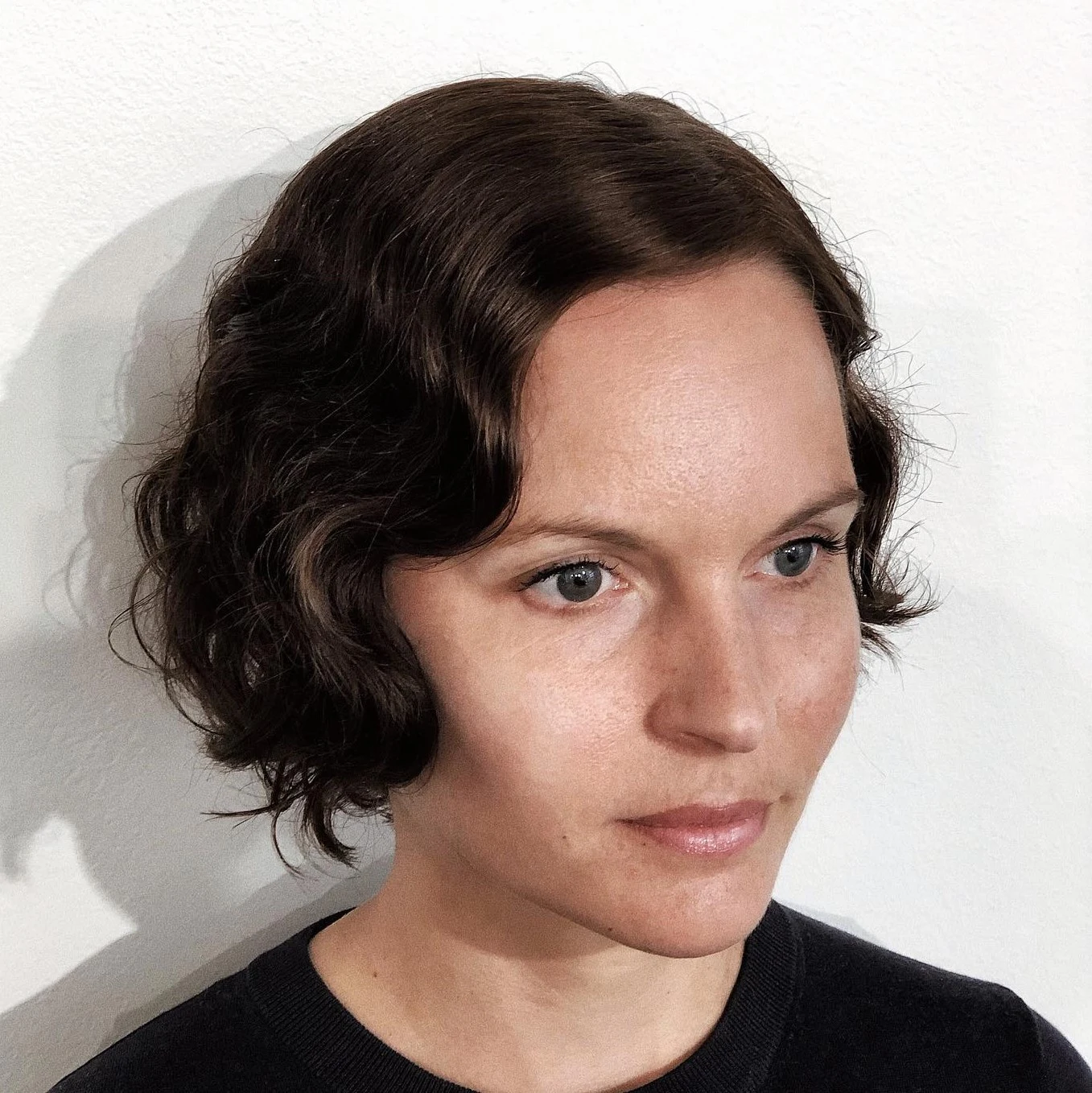
This style puts the wave right where it matters, along the hairline. A defined finger wave runs from the top layer down toward the sides, so the front of the hair has a clear, sculpted rhythm while the rest stays smooth and close. It reads as vintage at once, without needing a full head of curls.
It suits straight to wavy hair that holds a set well, and it flatters oval and longer face shapes because the wave breaks up the forehead line. If your hair slips easily, work on damp hair with a strong setting lotion and let the wave dry fully before you touch it. Brushing it out too early is the mistake that turns a crisp wave into frizz.
2. Flippy Bob with a Fringe
 Pin
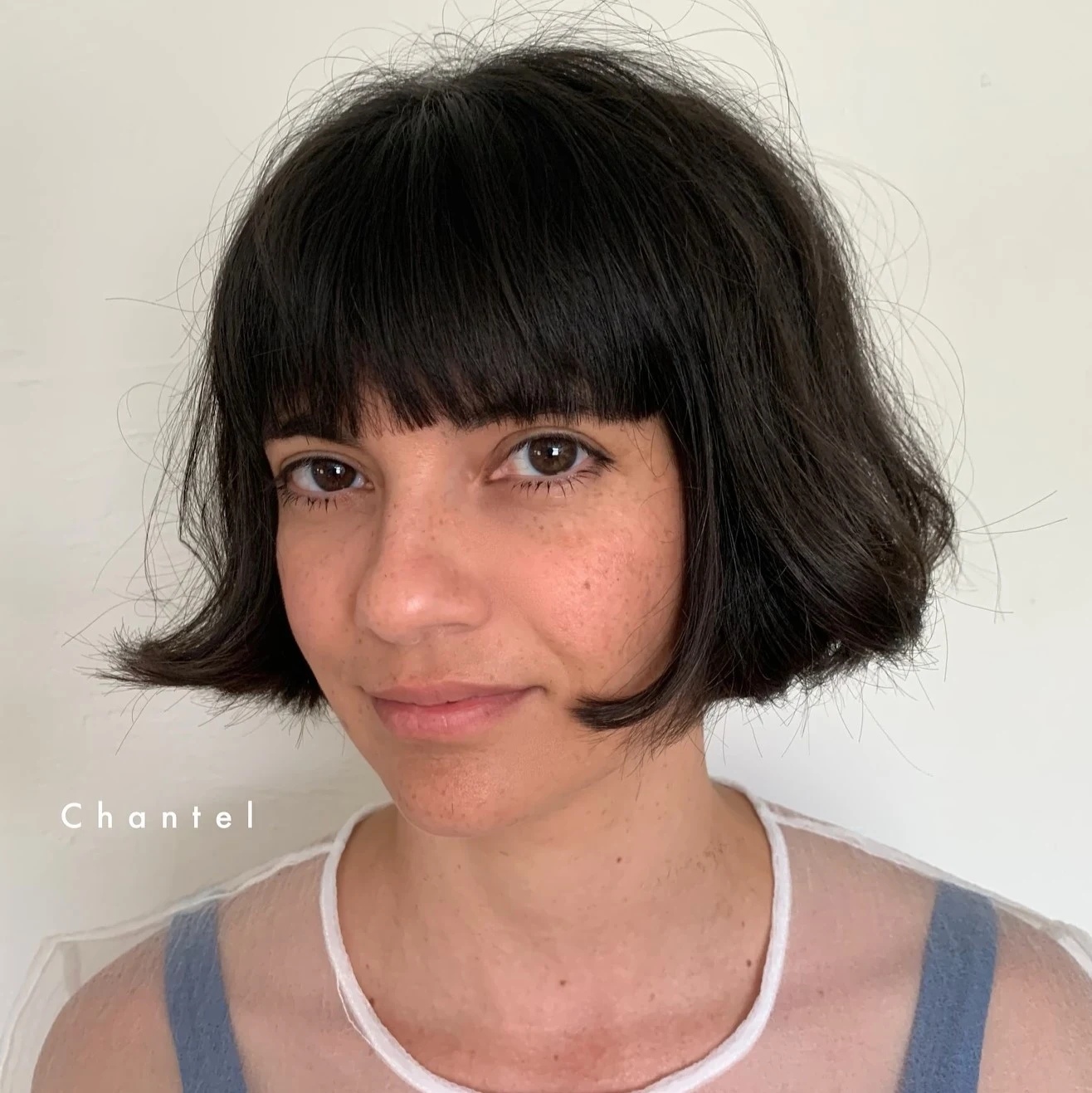
A short bob with a straight-across fringe gives this look its playful, silent film energy. The ends flip out just enough to keep the shape light, while the fringe frames the eyes and keeps the cut looking deliberate. It is short, neat, and full of movement.
It works best for straight or slightly wavy hair, and for people who like a cut that shows off cheekbones and a strong jawline. Ask for blunt ends with a little texture at the tips, rather than heavy layers. To keep the flip from falling flat, dry the ends outward with a small round brush and finish with a light spray, not a heavy cream.
3. Blonde Finger Wave Bob
 Pin
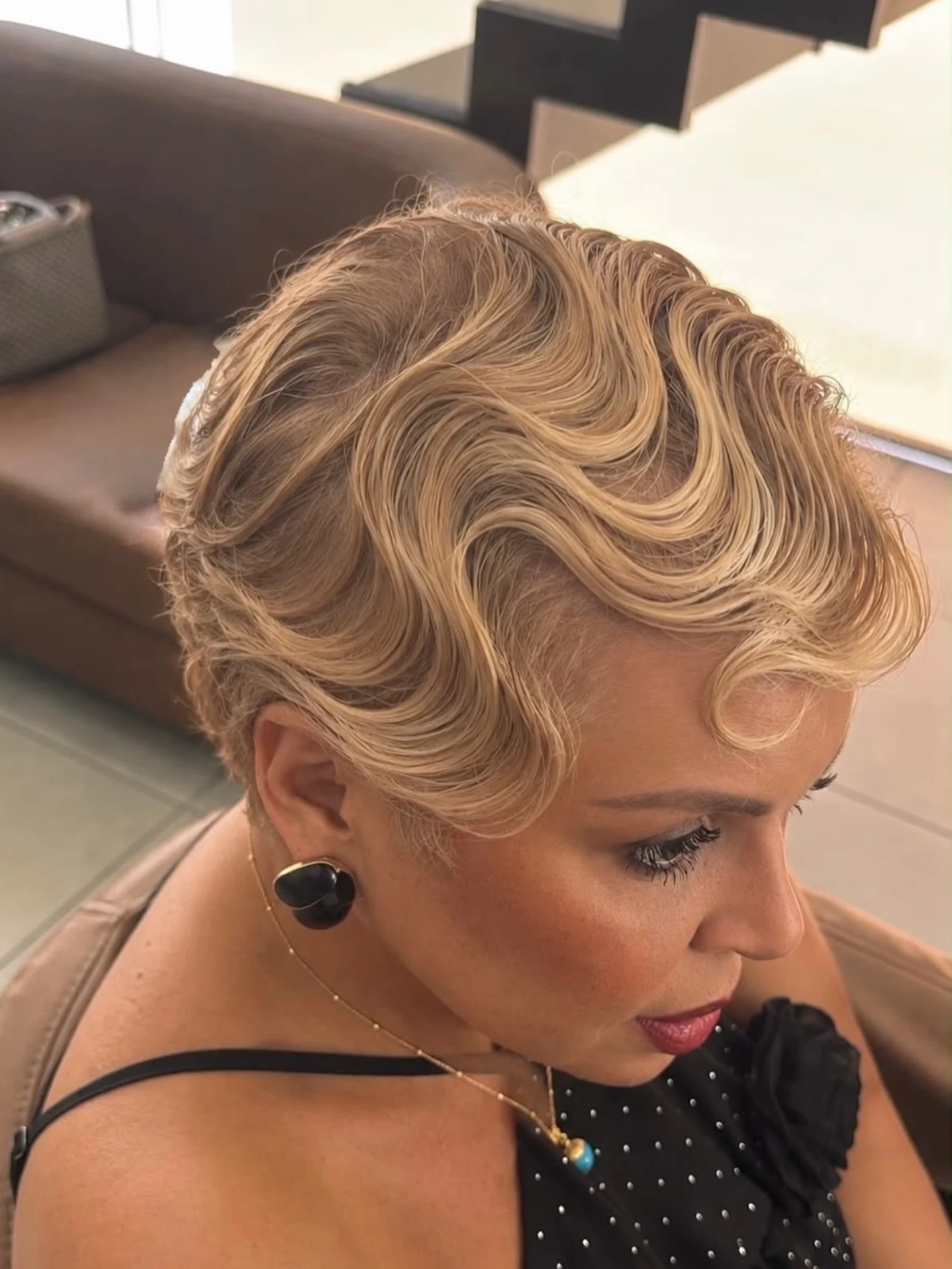
This blonde bob is all about deep, glossy finger waves that sweep across the head in wide S curves. The waves start high at the hairline and roll back in a smooth, continuous pattern, with a small curl tucked near the forehead for a soft finish. The length sits short, so the wave itself becomes the whole statement.
It flatters fine to medium hair because the set adds shape without needing volume at the roots, and it suits round and oval faces when the wave is kept close to the head. Set it on damp hair with gel and clips, and wait until it is completely dry before removing the clips. You can wear this one with real confidence.
4. Razored Bob
 Pin
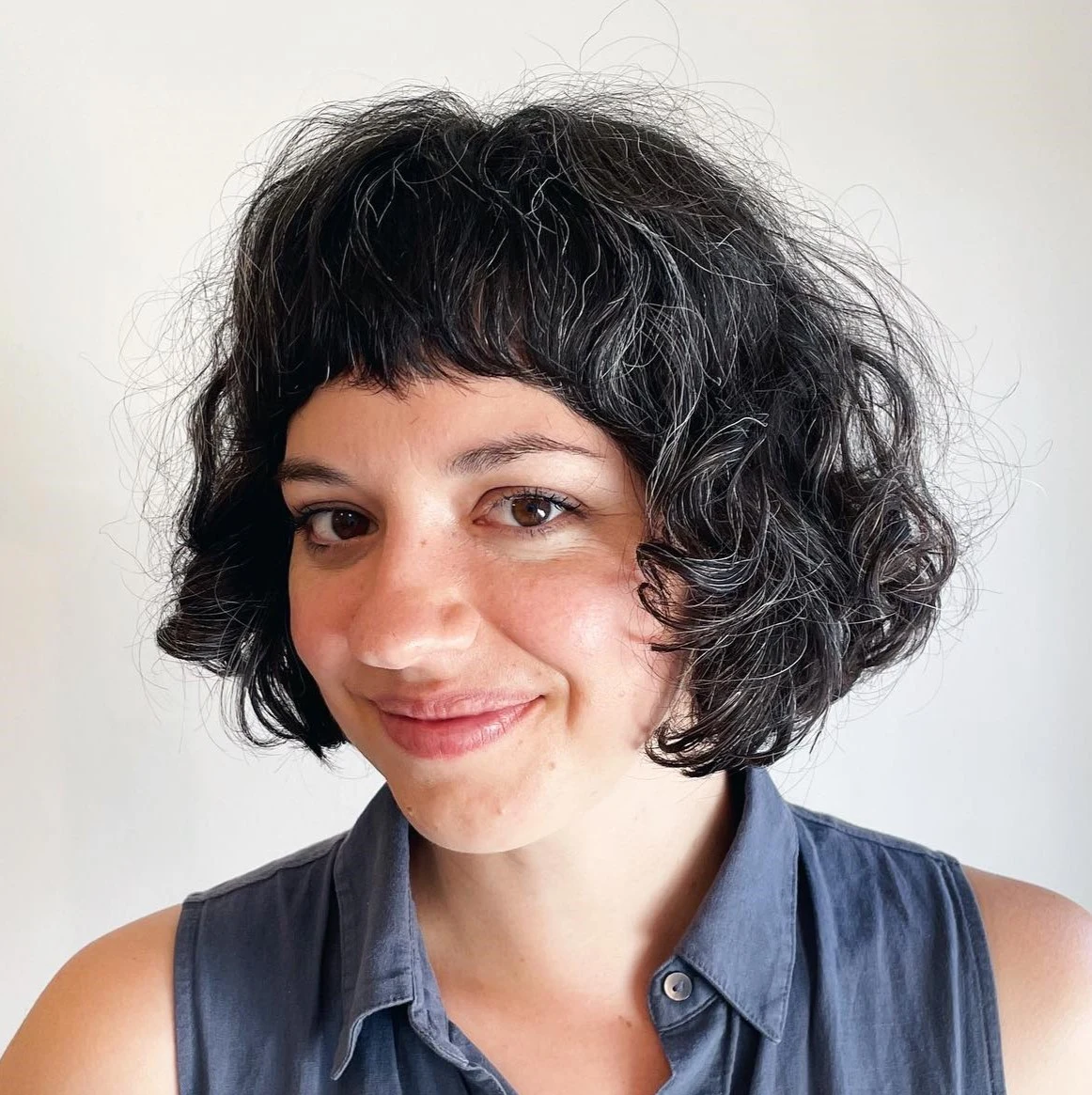
A razored bob keeps its weight low, so the shape stays rounded and soft rather than boxy. The razor work thins the ends just enough to let a natural wave move, while the overall length stays short and easy to manage. It looks relaxed, not overly styled, which is part of its charm.
This is a good choice for wavy hair that tends to puff out at the ends, and for anyone who wants a bob that grows out gracefully. Ask for a rounded outline with soft, razored ends instead of a blunt line. The tip to remember is to avoid heavy styling products, since they can weigh the razored ends down and hide the wave.
5. Defined Finger Waves
 Pin
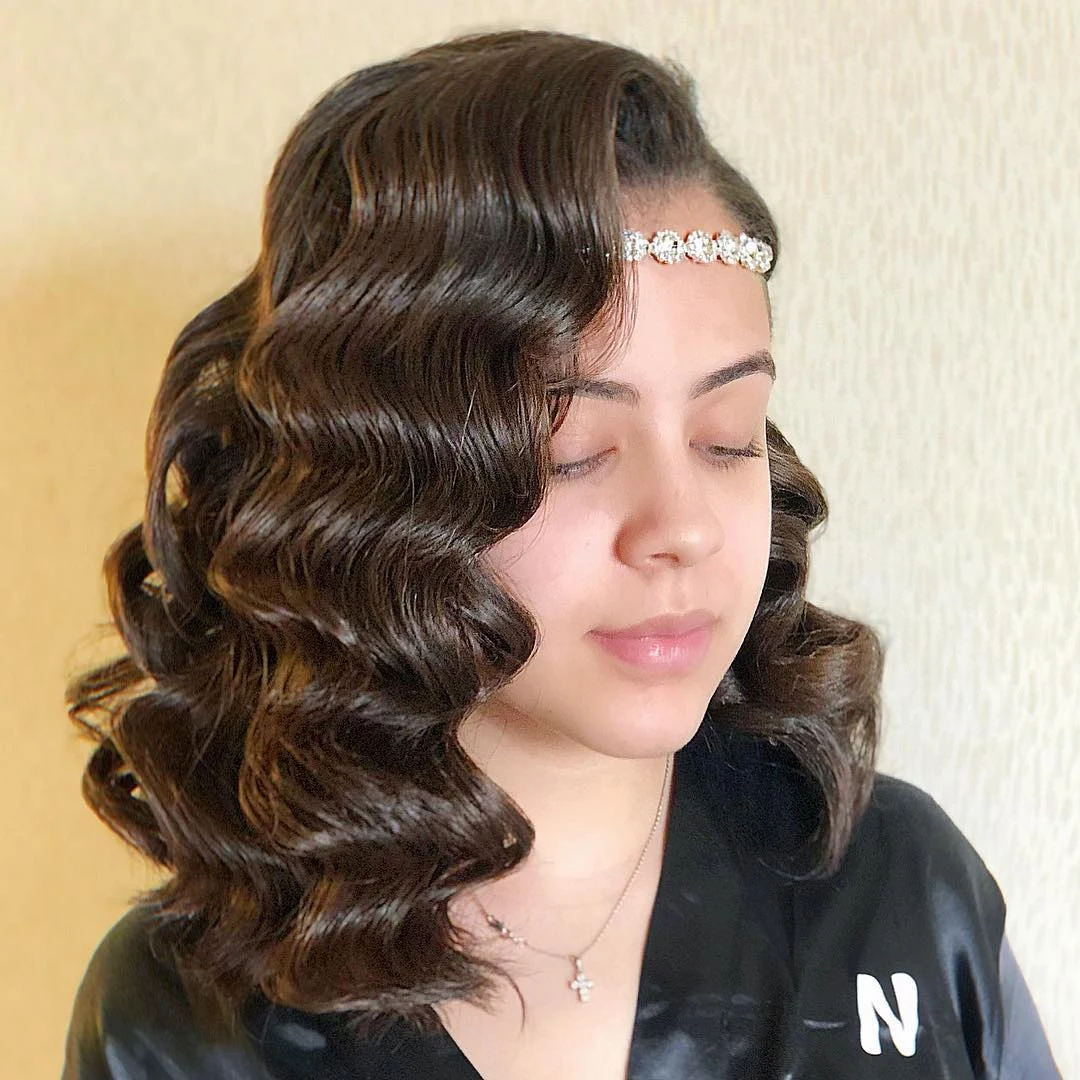
These finger waves are tighter and more structured than a soft wave, with a clear pattern that runs from the roots down into longer lengths. The result has root lift at the front and a cascading wave through the rest of the hair, so it feels formal but still fluid.
It suits medium to long hair that can hold a set, and it is a strong pick for a wedding or a themed evening when you want the hair to look finished from every side. Work in small sections with a fine comb and setting lotion, and pin each wave in place while it dries. Skipping the pins is the usual reason a defined wave loosens within an hour.
6. Loose Flapper Hairstyle
 Pin
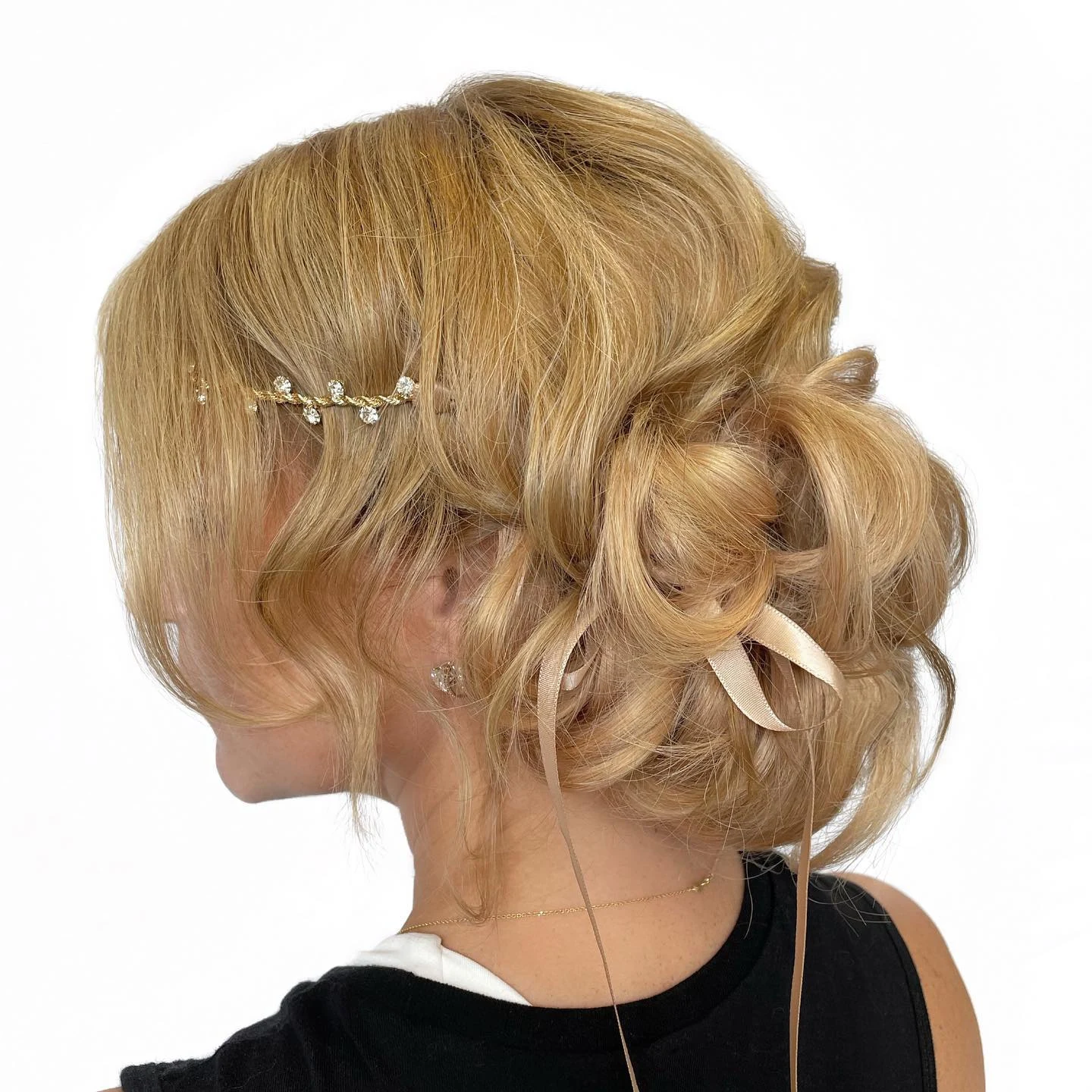
Want a 1920s look without cutting your hair short? This loose flapper style keeps the length and adds a soft wave plus a sparkling headband worn across the forehead. The wave is gentle rather than sculpted, so the hair still moves, and the headband gives the whole look its party-ready finish.
It flatters long, straight to wavy hair and suits anyone trying a vintage theme for the first time. Place the headband low, just above the brows, and pin it at the sides so it does not slide back during the evening. A light wave set with a large curling iron will hold better than tight curls brushed out too hard.
7. Disconnected Hairstyle
 Pin
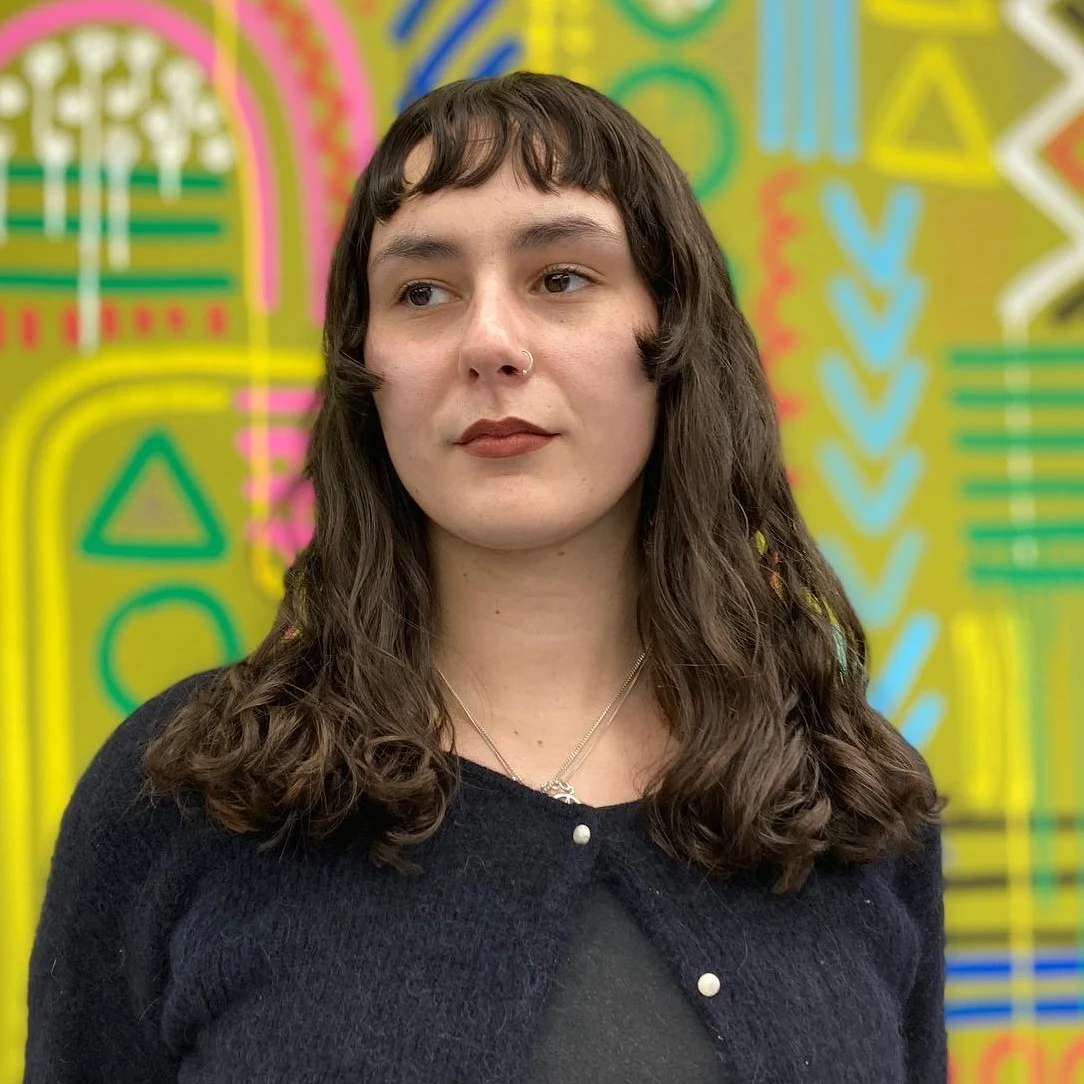
This cut pairs a longer top with shorter, disconnected layers underneath, so most of the volume sits toward the ends. The top is lightly textured into soft curl, while the fringe and face framing pieces keep the front feeling fresh. It is a modern take on a vintage idea, with a clear contrast between top and ends.
It suits thick hair that needs weight removed without losing length, and it works well for people who like a bit of edge in an otherwise classic shape. Ask your stylist to keep the disconnection visible but blended at the fringe, so it does not look accidental. Use a light texturising spray on the top only, and leave the ends alone to keep their weight.
8. Micro Bob
 Pin
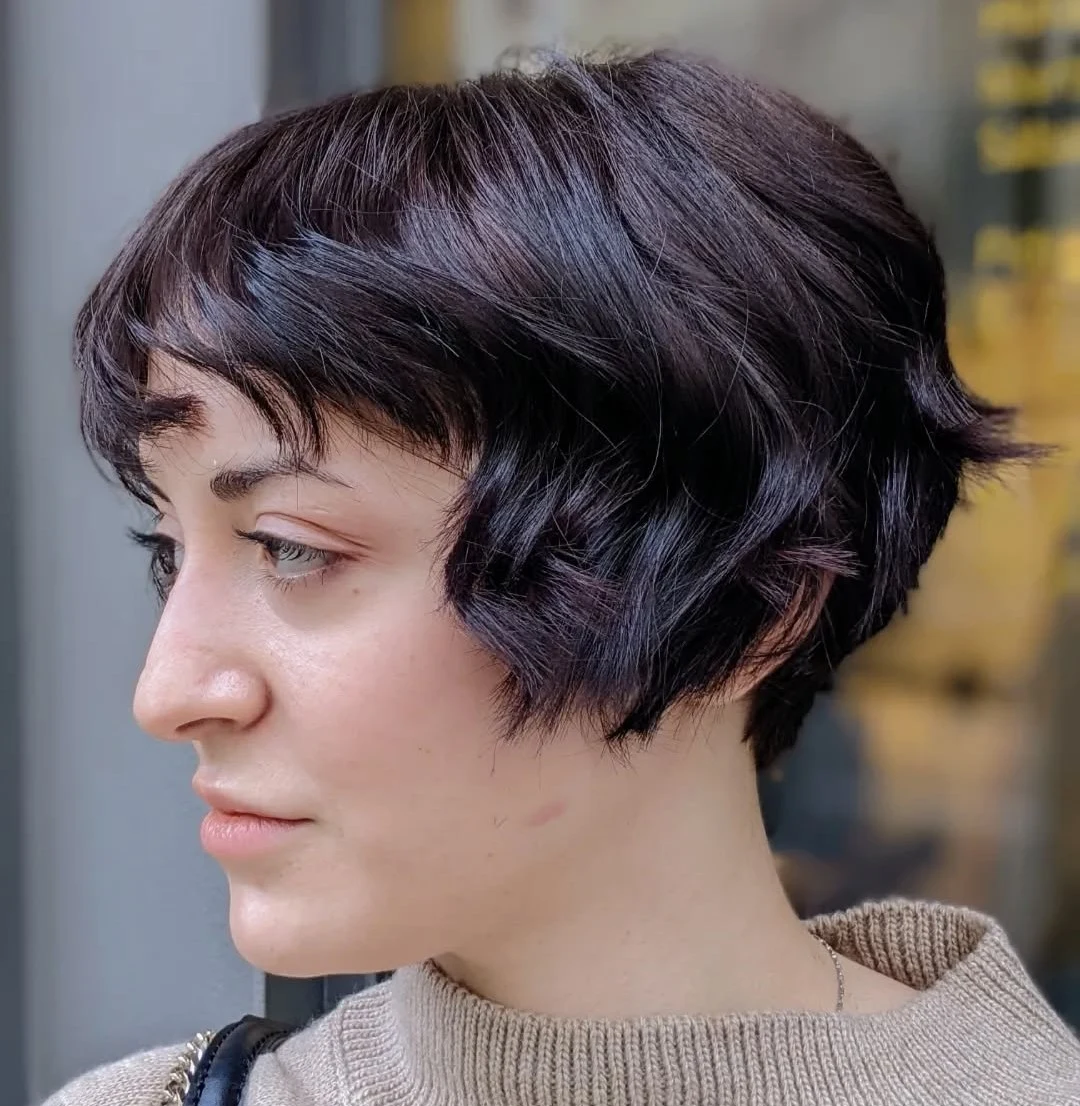
A micro bob sits high, covering the ears with a stacked shape at the back. The length is short enough to feel dramatic, yet the stacked back keeps it rounded and wearable. A subtle wave through the top stops it from looking too severe.
It flatters straight to wavy hair with a finer texture, and it suits smaller face shapes because the short length opens up the neck and jawline. If you want the wave to last, curl small sections with a curling iron and let them cool before you touch them. Touching hot curls straight away is the fastest way to lose the shape.
9. Sculpted Finger Wave Bob with Pin Curls
 Pin
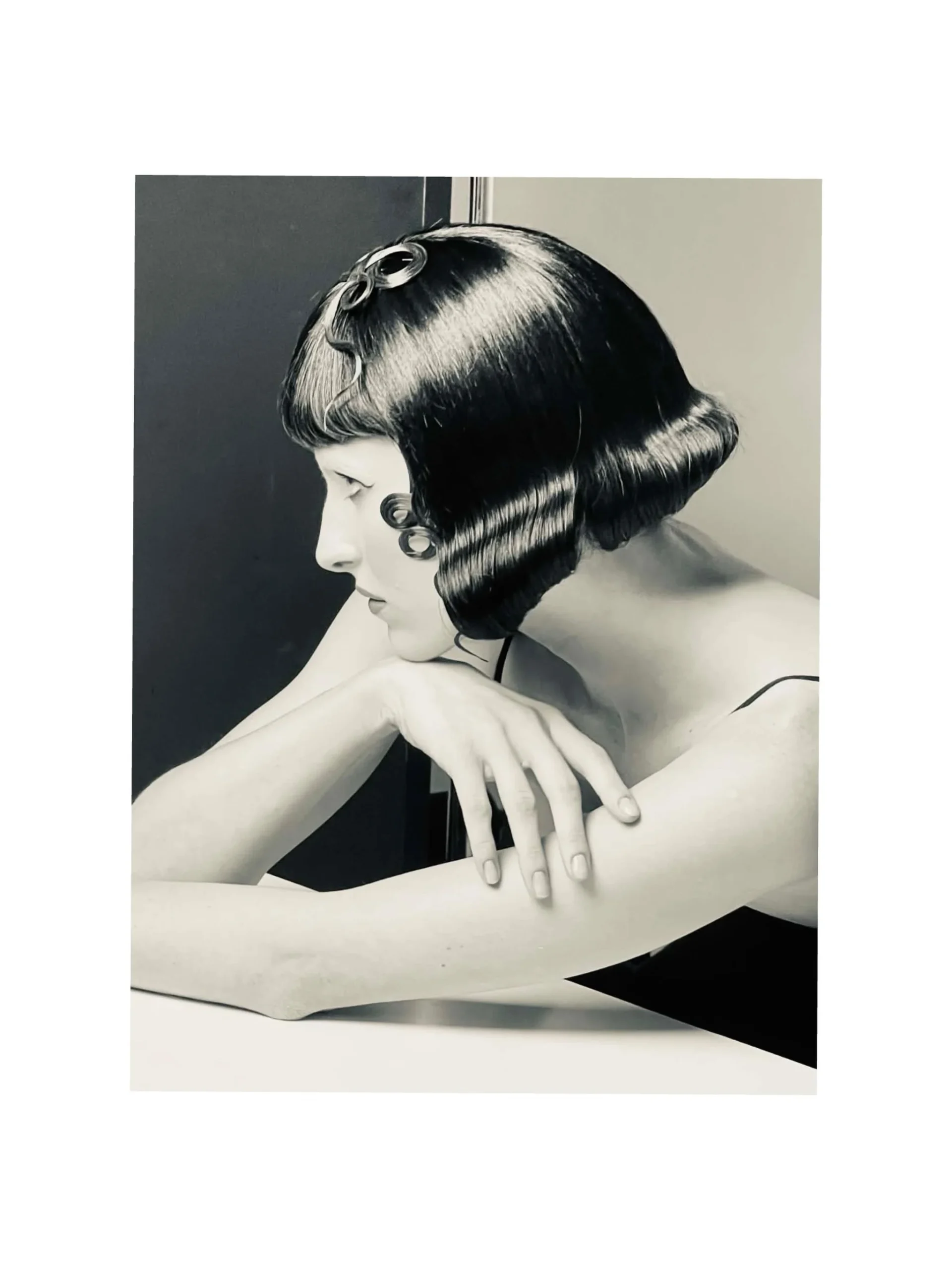
This bob is sculpted to a high shine, with a smooth, rounded shape and a short fringe. Small pin curls sit near the temple and at the front hairline, adding a decorative detail that makes the style feel hand finished. The waves through the sides stay tight and glossy, so the silhouette stays compact.
It suits straight hair that takes a smooth set, and it flatters oval and heart shaped faces because the fringe and side curls draw attention to the eyes. Keep the set sleek by using a strong gel and a fine comb, and smooth flyaways with a touch of pomade on your fingertips only. Too much product at the roots will dull the shine.
10. Sleek French Bob
 Pin
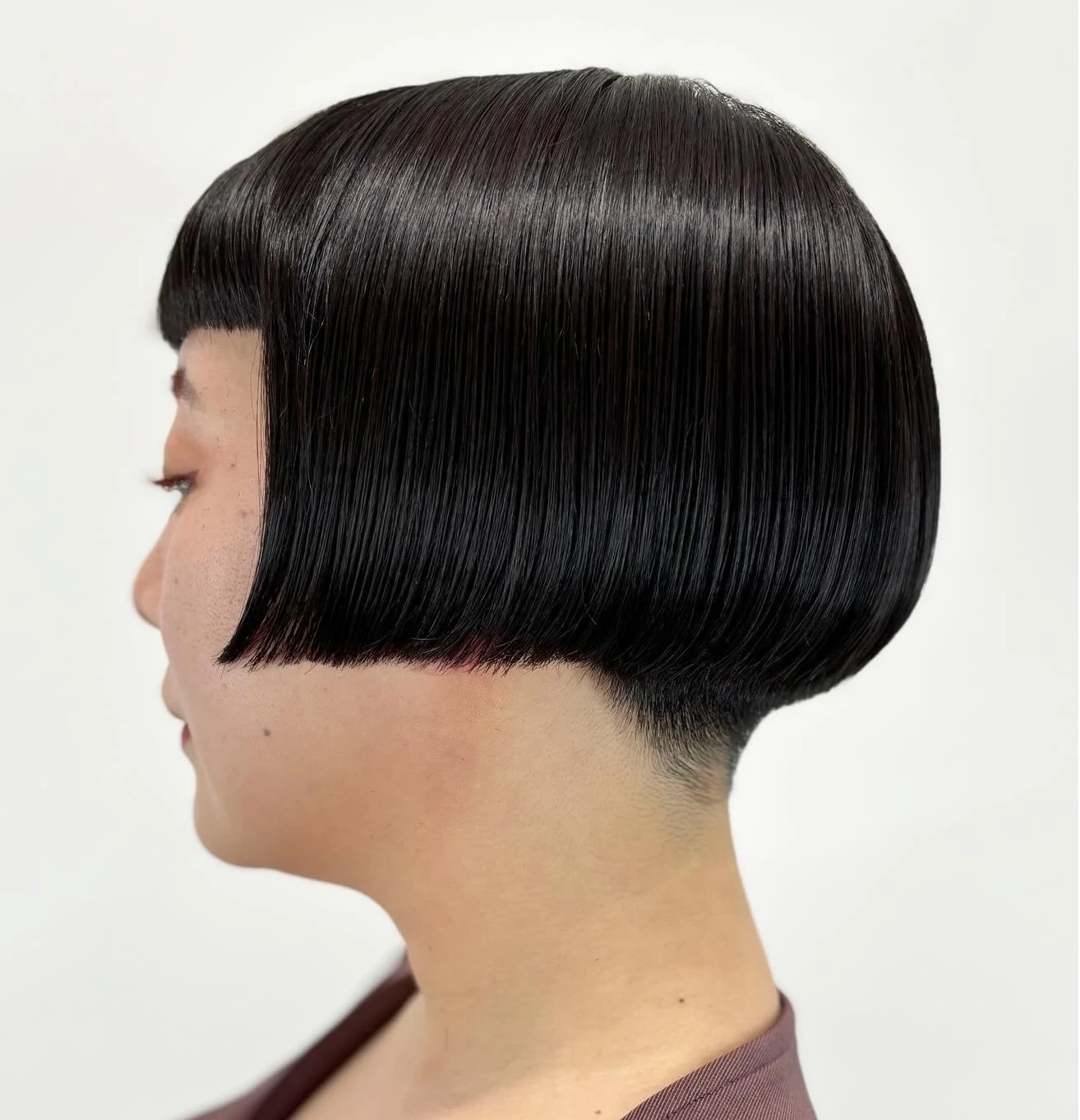
The French bob here is closely cropped at the nape with angled sides and blunt ends. That sharp outline is what makes it look so modern, even a century on. The hair lies smooth and close, so the cut itself does the talking.
It works best for straight hair, and for anyone who wants a low effort cut with a strong shape. It flatters oval, square, and heart shaped faces, since the angled sides soften the jaw while the blunt ends keep the look crisp. Ask for a clean nape and ends cut straight across, and avoid layering the sides if you want that sharp finish. A smoothing serum on damp hair will keep the surface sleek.
Its lasting, modern feel helps explain why this shape keeps reappearing among the biggest haircut trends of 2026.
11. Faux Bob Style
 Pin
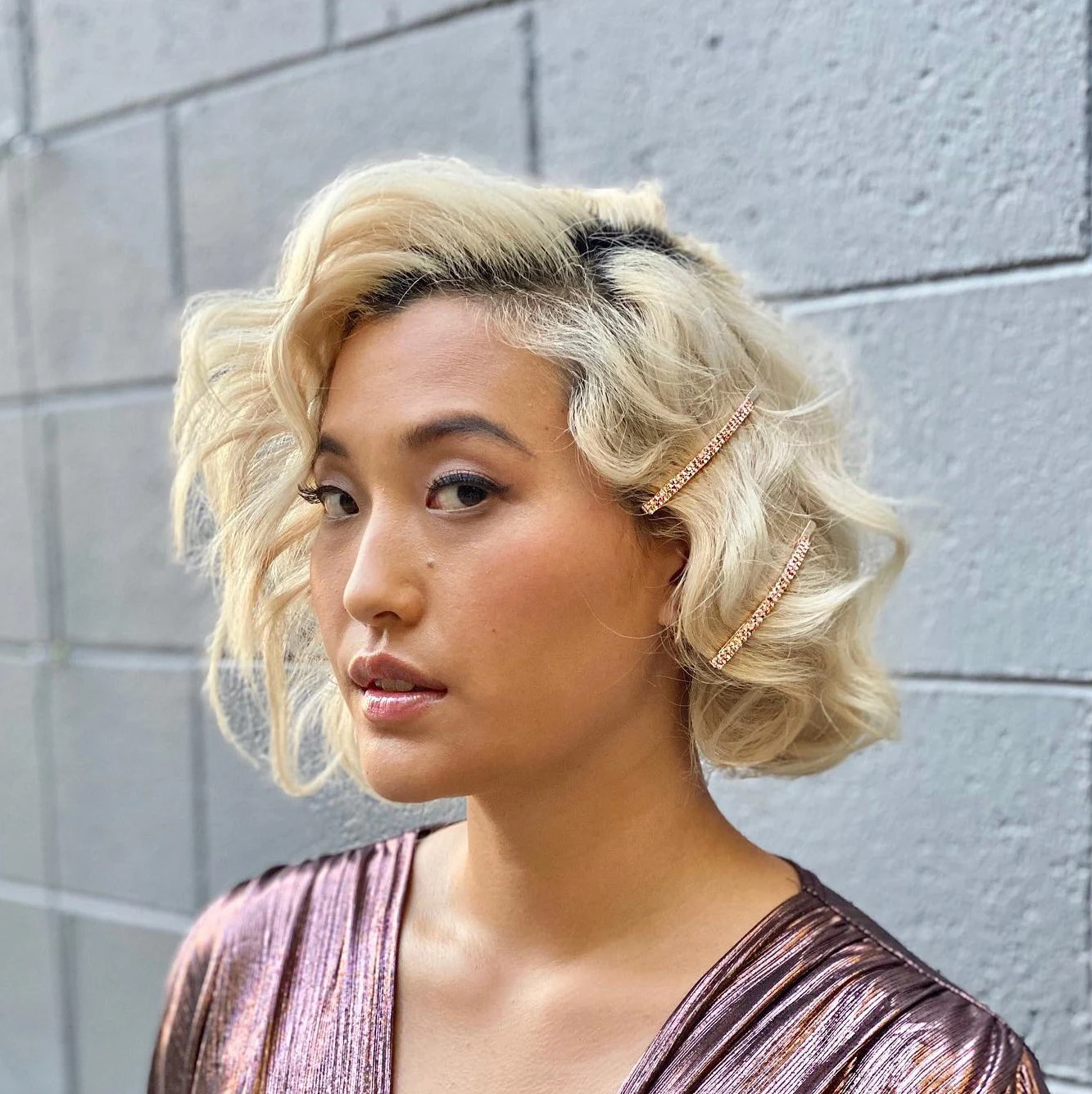
A faux bob lets you test short hair without a cut. The hair is waved in one direction, then the ends are tucked under and pinned at the nape, so the length reads as a bob from the front. The wave keeps it soft, so it does not look like hair simply folded away.
It suits medium to long hair, especially wavy hair that already has some bend, and it is ideal if you are unsure about going short. Pin the tucked ends in small, even sections rather than one large roll, which tends to slip. A texturising spray through the wave will help it grip. It leaves you looking polished and feeling sure of yourself.
12. Hollywood Waves
 Pin
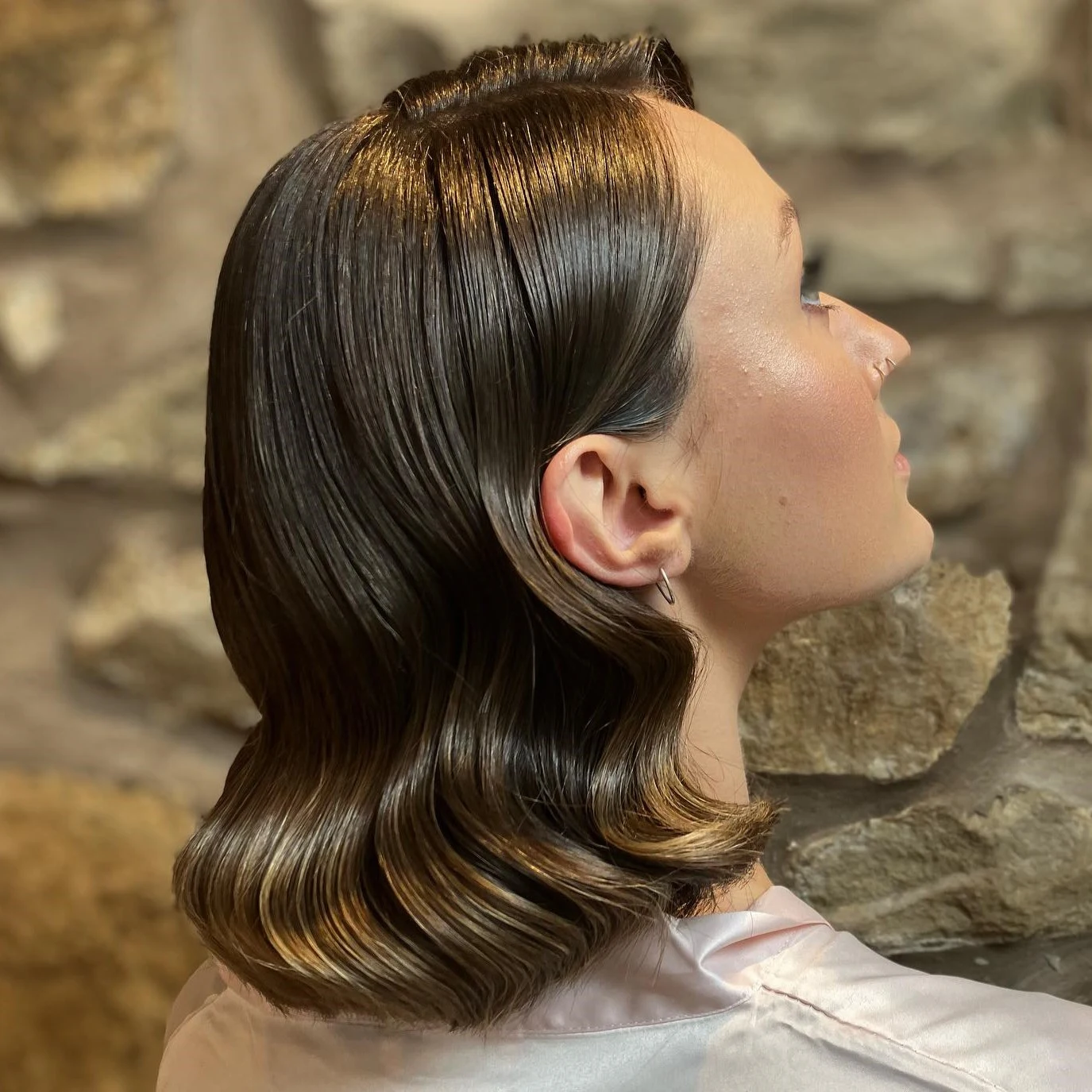
Hollywood waves are wider and softer than finger waves, with large, brushed out curls that fall in a smooth, continuous pattern. On mid-length hair they give a luxurious, old film feel without the stiffness of a sculpted set. The wave starts near the roots and flows down to the ends.
This style suits medium hair, straight to wavy, and it is a reliable choice for a bride or bridesmaid who wants glamour that photographs well. Curl all sections in the same direction, let them cool, then brush gently to join them into one wave. Brushing too hard, or in different directions, breaks the pattern into separate curls.
13. Classic Pin-Up Style
 Pin
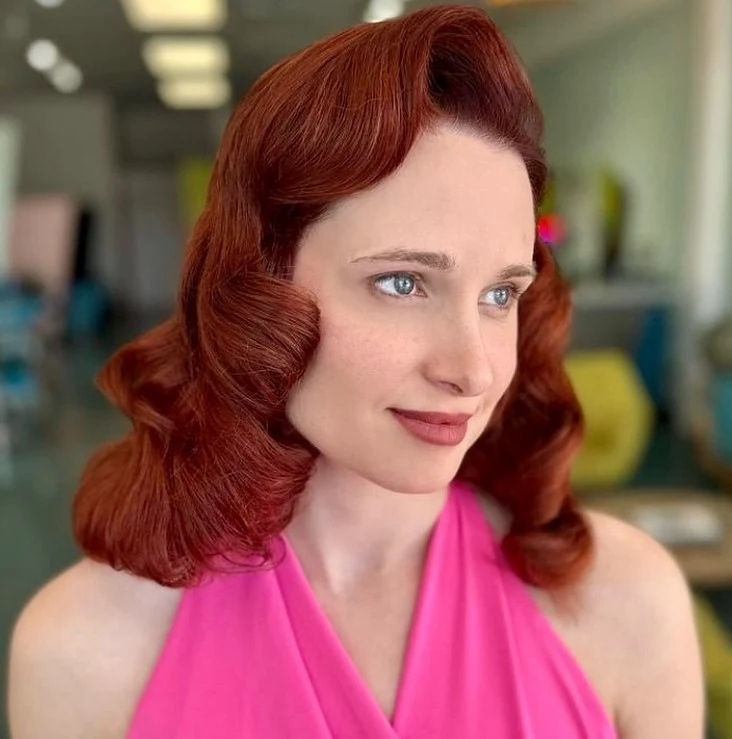
Looking for a little more lift at the roots? This pin-up style arranges soft waves around the face for a framing effect, with volume built in at the crown. The waves are loose enough to move, but shaped enough to hold their place through the day.
It flatters mid-length hair that falls flat at the roots, and it suits round and oval faces because the face framing wave opens up the features. Backcomb lightly at the crown only, then smooth the top layer over it so the lift looks natural. Spray the roots, not the ends, if you want the volume to last without stiff lengths.
14. Classic Dark Finger Waves
 Pin
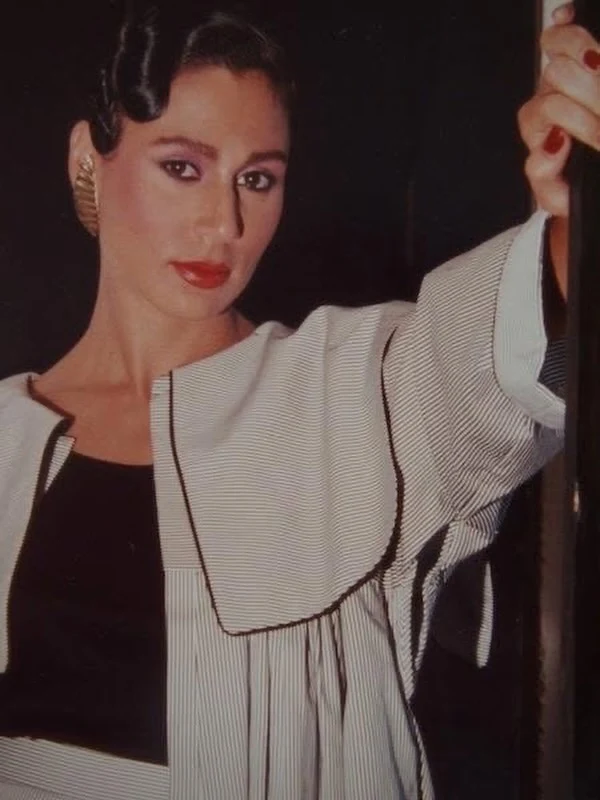
Dark hair shows a finger wave pattern especially well, and this look keeps it simple and strong. The hair is slicked back close to the head, with a deep sculpted roll across the front hairline that gives the style its vintage signature. The rest stays smooth, so the wave at the front stands out.
It suits straight, dark hair that can be smoothed flat, and it flatters oval and longer faces because the slicked sides lengthen the profile. Use a strong hold gel on damp hair and a fine comb to shape the front roll, then let it set without touching it. Re-combing a set wave while it is still damp will blur the roll.
15. Sculpted Wavy Updo
 Pin
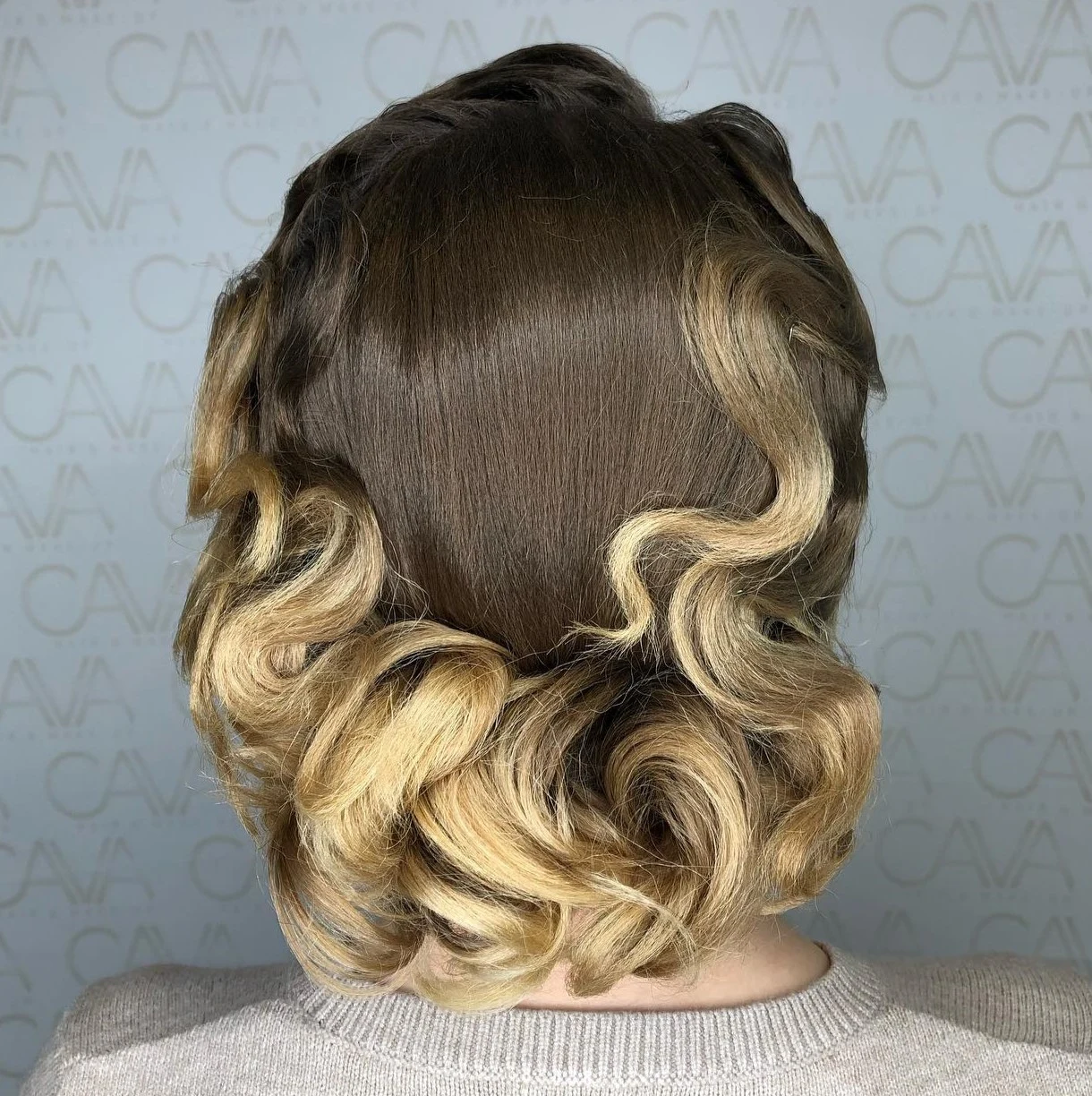
This updo gathers wavy hair into a loose, nest-like shape at the back, with soft waves left visible through the top and sides. It feels relaxed rather than tight, which makes it a good party option when you want vintage style without a stiff updo.
It suits medium to long wavy hair, and it works well for anyone who finds a neat bun too formal. Gather the hair loosely, pin in small sections, and leave a few waves free at the front to soften the outline. Pulling every strand tight is the mistake that turns this soft updo into a plain bun.
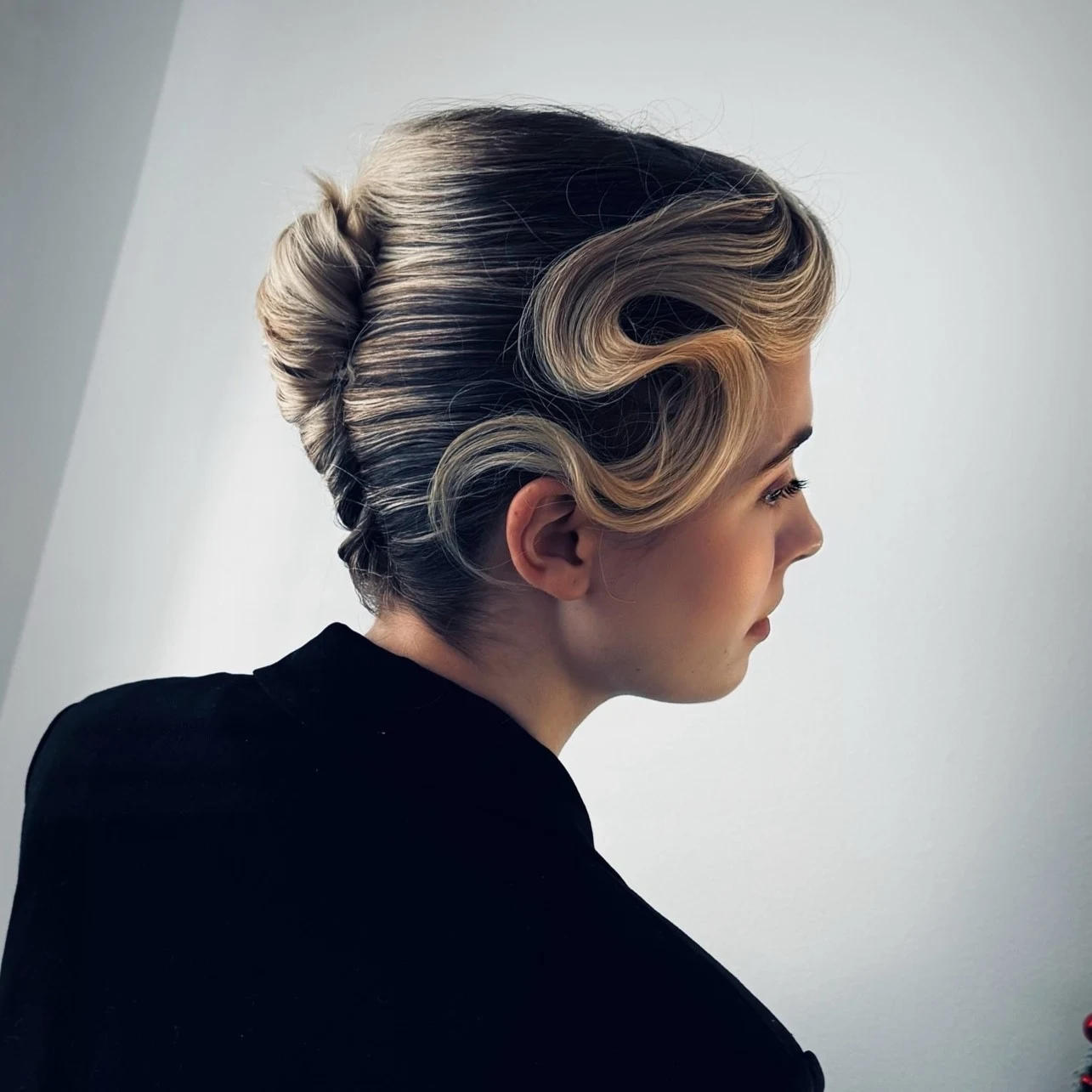
16. French Twist with Front Wave
 Pin
A French twist gets its vintage character from a single statement wave at the front. The wave starts at the top of the head and curves to the side in a clear S shape, while the back is twisted up neatly. Together they make a formal updo that still looks simple.
It suits medium to long straight to wavy hair, and it flatters longer necks and oval faces because the twist lifts the profile. Shape the front wave first with gel and clips, then twist the back around it, so the wave does not get pulled flat. If the twist feels loose, add pins along the fold rather than tightening the whole style.
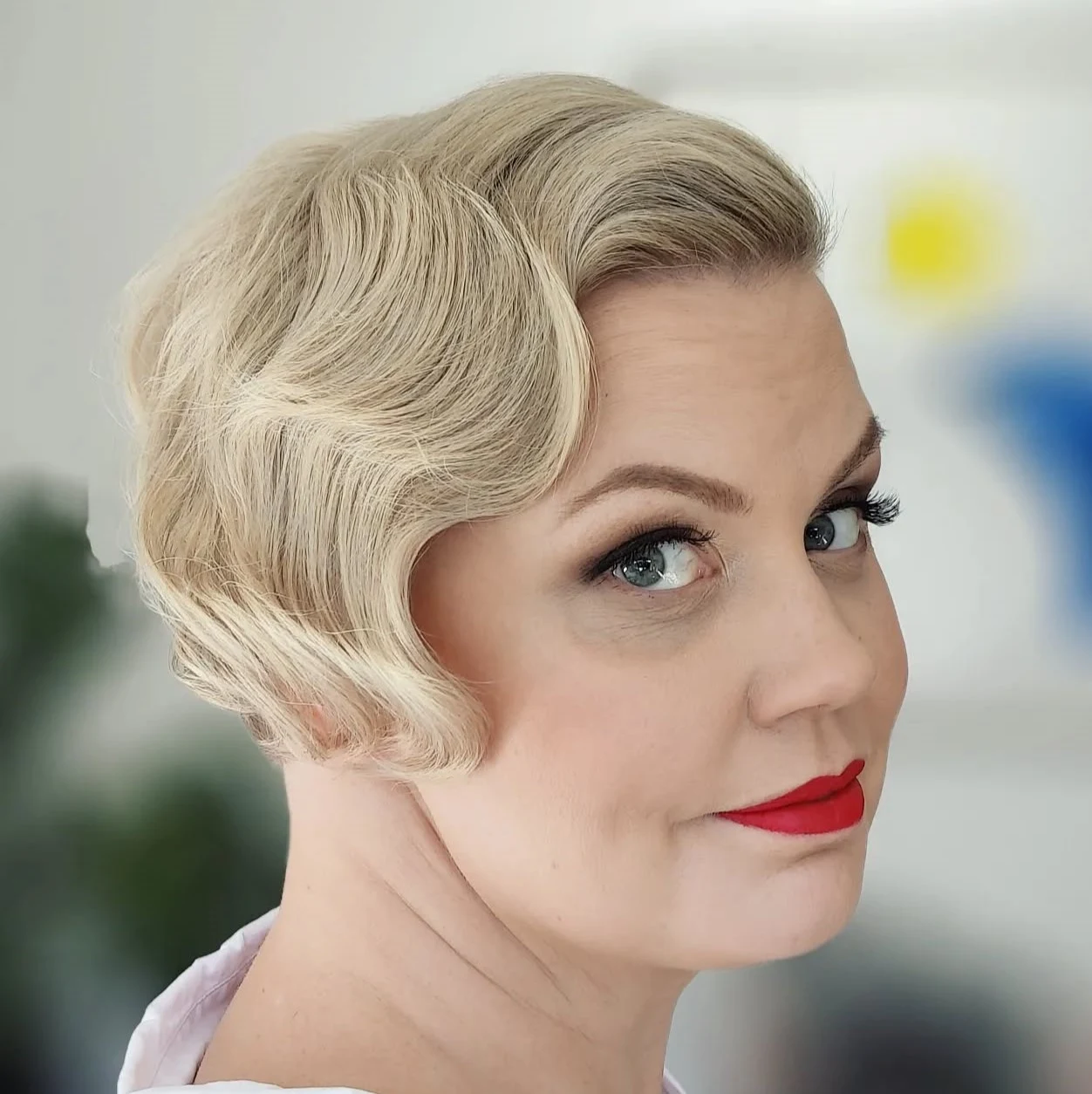
17. Wavy Bixie
 Pin
A bixie sits between a bob and a pixie, and here the top is textured into soft waves while the sides stay shorter. That mix gives you the ease of a pixie with a little more length to play with on top. The wave through the crown is the detail that ties it to the 1920s.
It suits wavy hair that has natural texture, and it flatters round and square faces when the top wave is kept soft rather than spiky. Ask for length left on top and a clean, tapered outline below. To style it, scrunch a light mousse through the top only and let it air dry, so the sides stay neat.
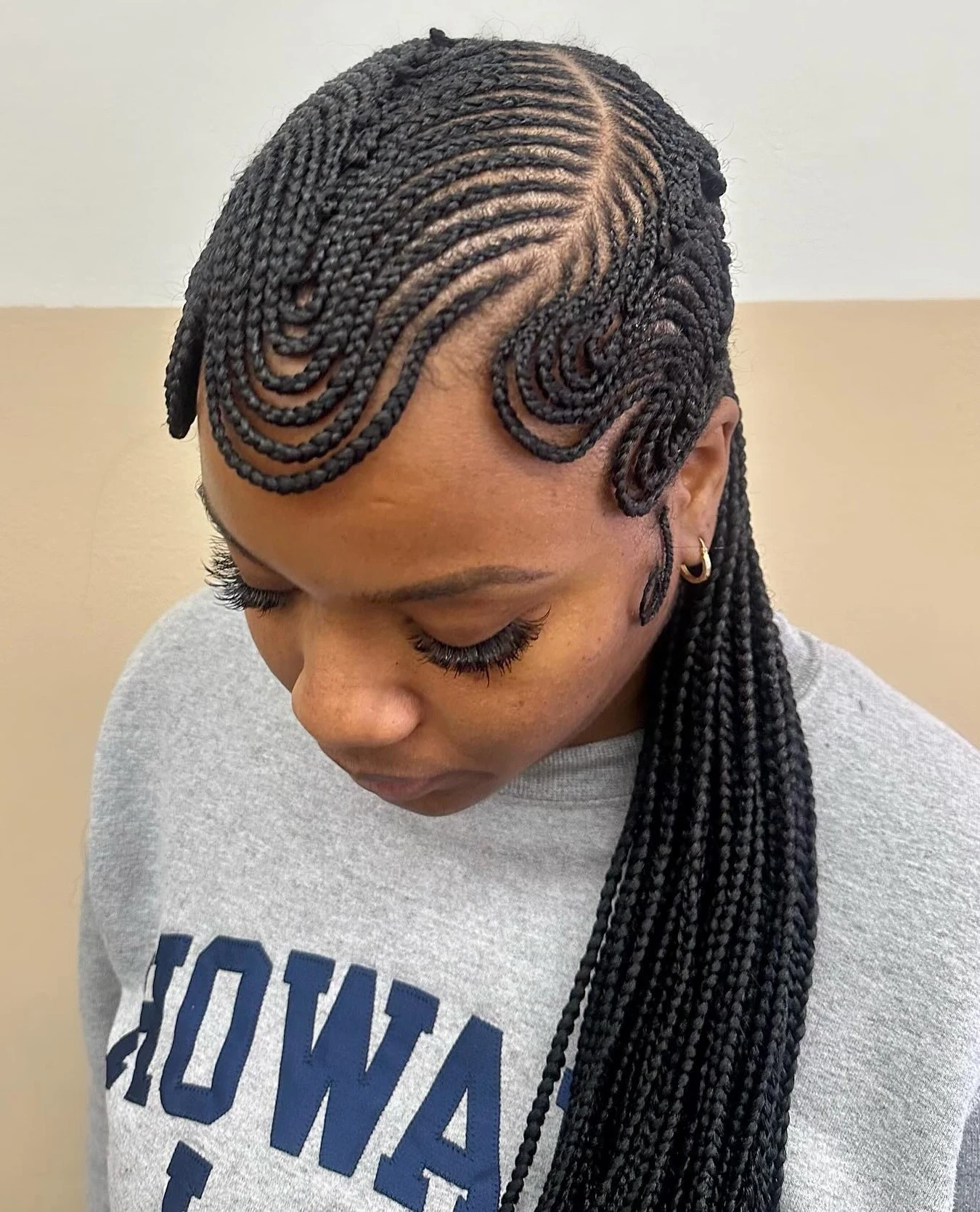
18. Braided Swirls
 Pin
Braided swirls turn the finger wave idea into a braided pattern, with small braids shaped into swirls close to the head. The design reads as both protective and artistic, and the swirls give the hair a clear, graphic rhythm that a plain wave cannot match.
It suits textured hair that braids well, and it is a strong choice if you want a 1920s inspired look that lasts for days rather than hours. Keep the braids neat at the hairline and avoid pulling them too tight, since tension at the front is uncomfortable and can damage fine edges. It is the kind of style that makes you stand a little taller.
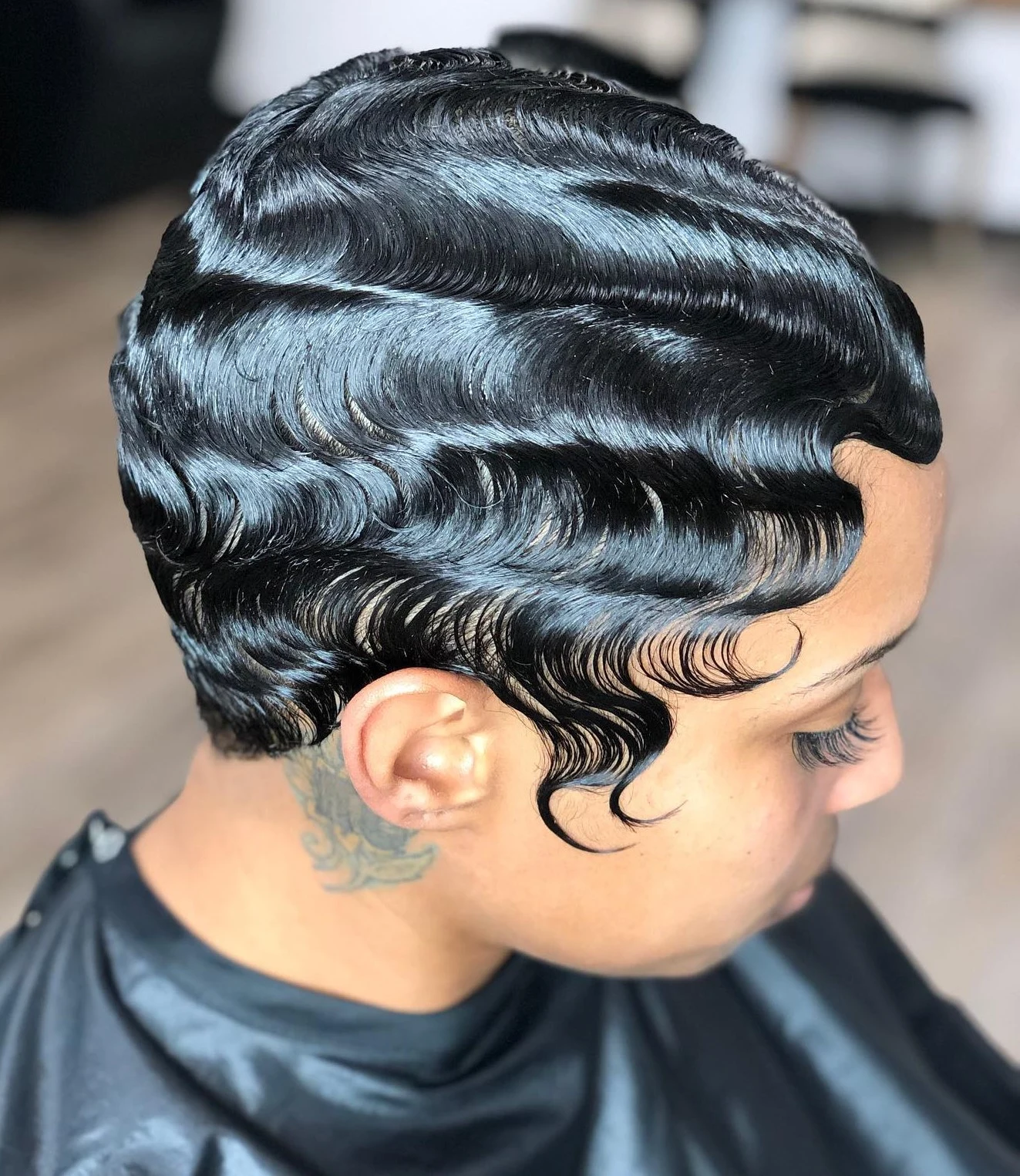
19. Finger-Wave Pixie
 Pin
A finger-wave pixie keeps the cut very short and adds a classic wave pattern across the top and sides. The waves are sculpted close to the head, so the style looks polished even though the length is minimal. It is one of the most recognisable 1920s shapes.
It suits short, straight to wavy hair, and it flatters oval and heart shaped faces because the short length puts the focus on the eyes and cheekbones. Set the waves with gel on damp hair and use clips to hold the ridges while they dry. The common mistake is using too little product, which lets the wave fall out before the day is over.
20. Blunt Bob with Straight Bangs
 Pin
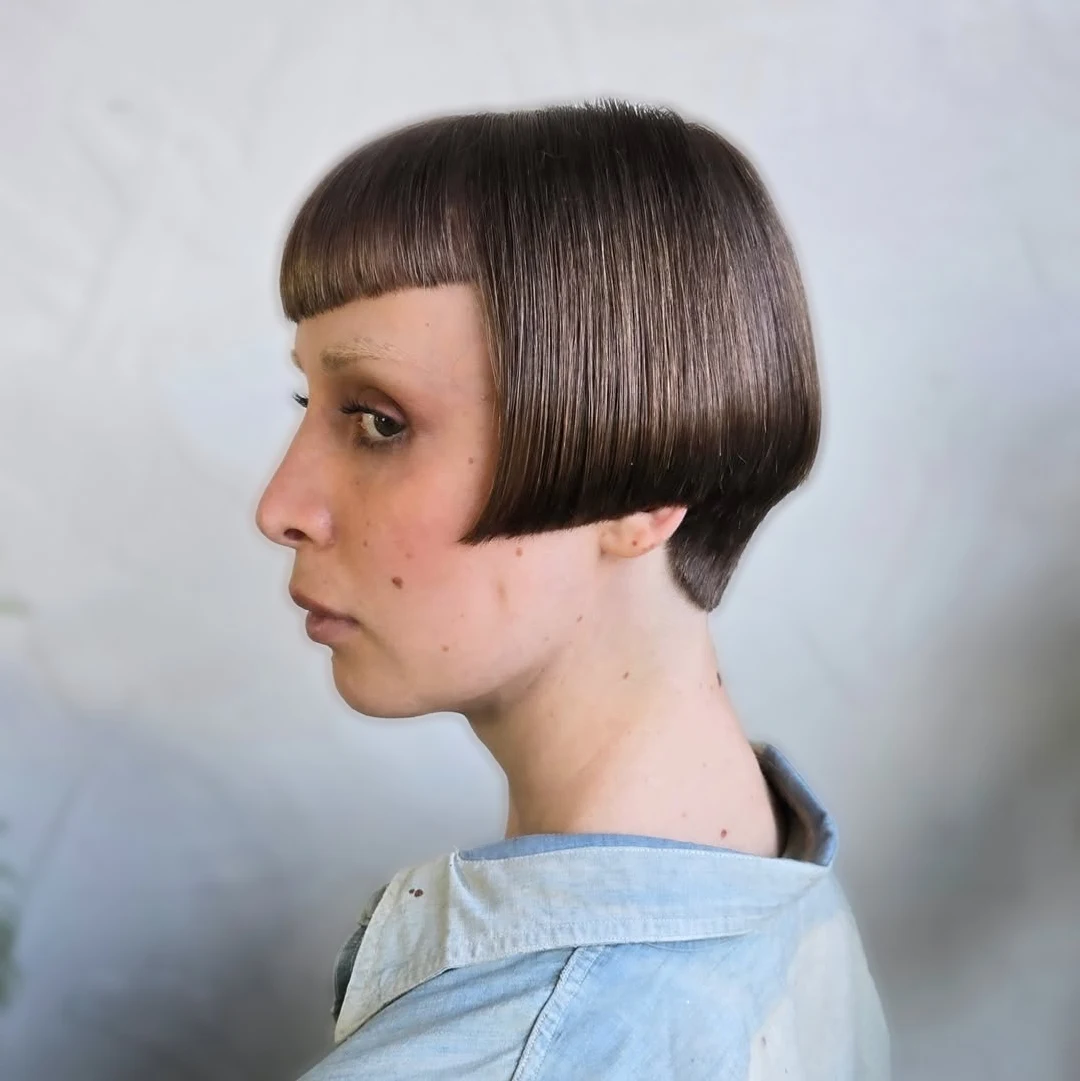
Ever wondered how sharp a bob can look without any wave at all? This blunt bob answers that question. The hair is cut straight across at chin length, with a short, straight fringe and a tapered nape, so the whole shape reads as one clean line. There is no wave to soften it, and that is the point.
It suits straight, fine to medium hair that falls flat naturally, and it flatters oval and longer faces when the fringe sits just above the brows. Ask for a blunt perimeter and a clean nape, not layers through the ends. Dry it smooth with a paddle brush, and avoid texturising spray, which would break the clean line.
21. Short Pixie Cut
 Pin
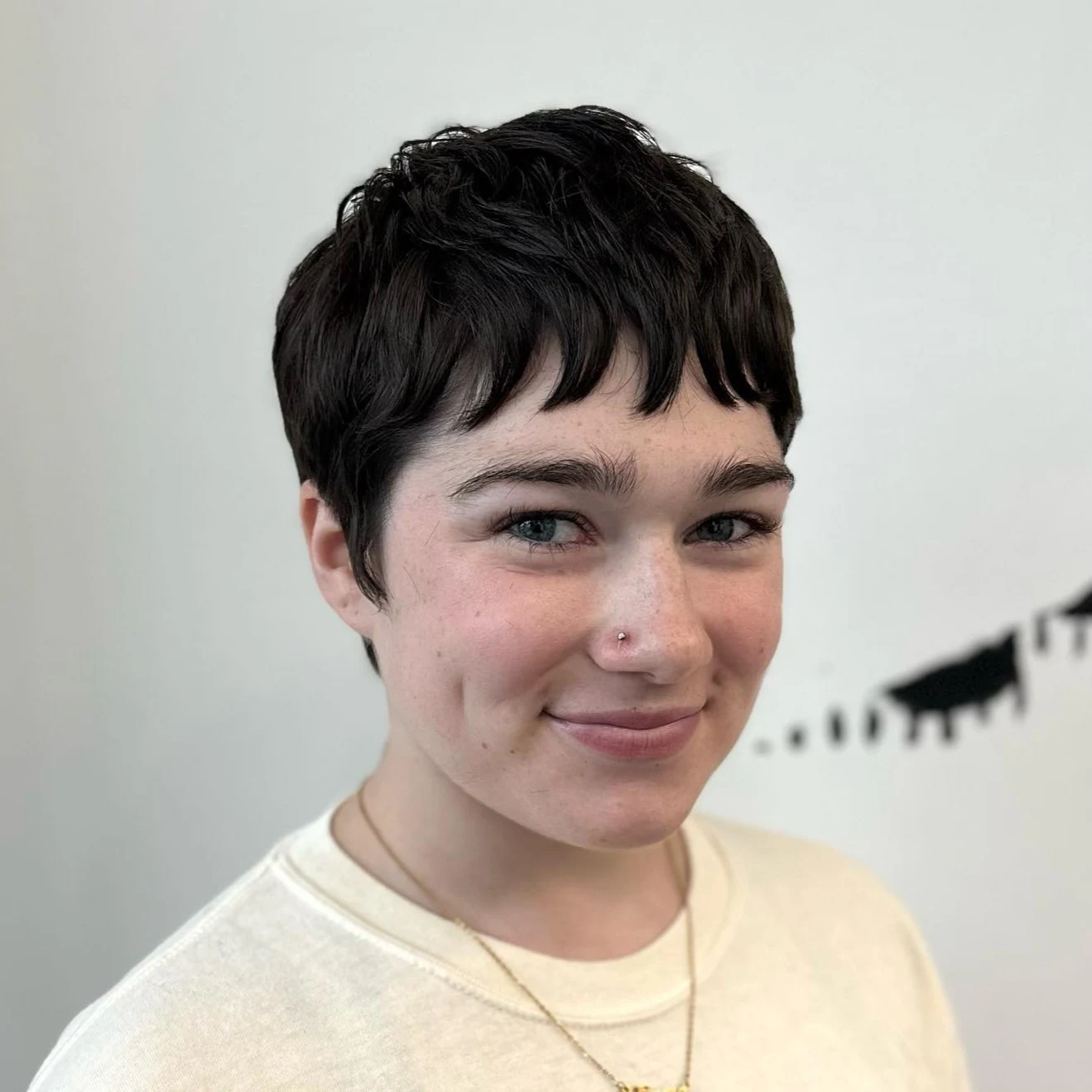
This short pixie uses piece-y bangs to frame the upper face, with short, textured layers through the top. The shape is light and a little playful, and it keeps the focus on the eyes. Styling is minimal, which is part of why the cut works so well.
It suits straight to slightly wavy hair, and it is a good pick for anyone who wants a short cut that still feels soft. Ask for texture through the bangs rather than a heavy, solid fringe. To keep the pieces defined, use a pea sized amount of pomade on the bangs only, and leave the rest of the hair product free.
22. Side Part Bob
 Pin
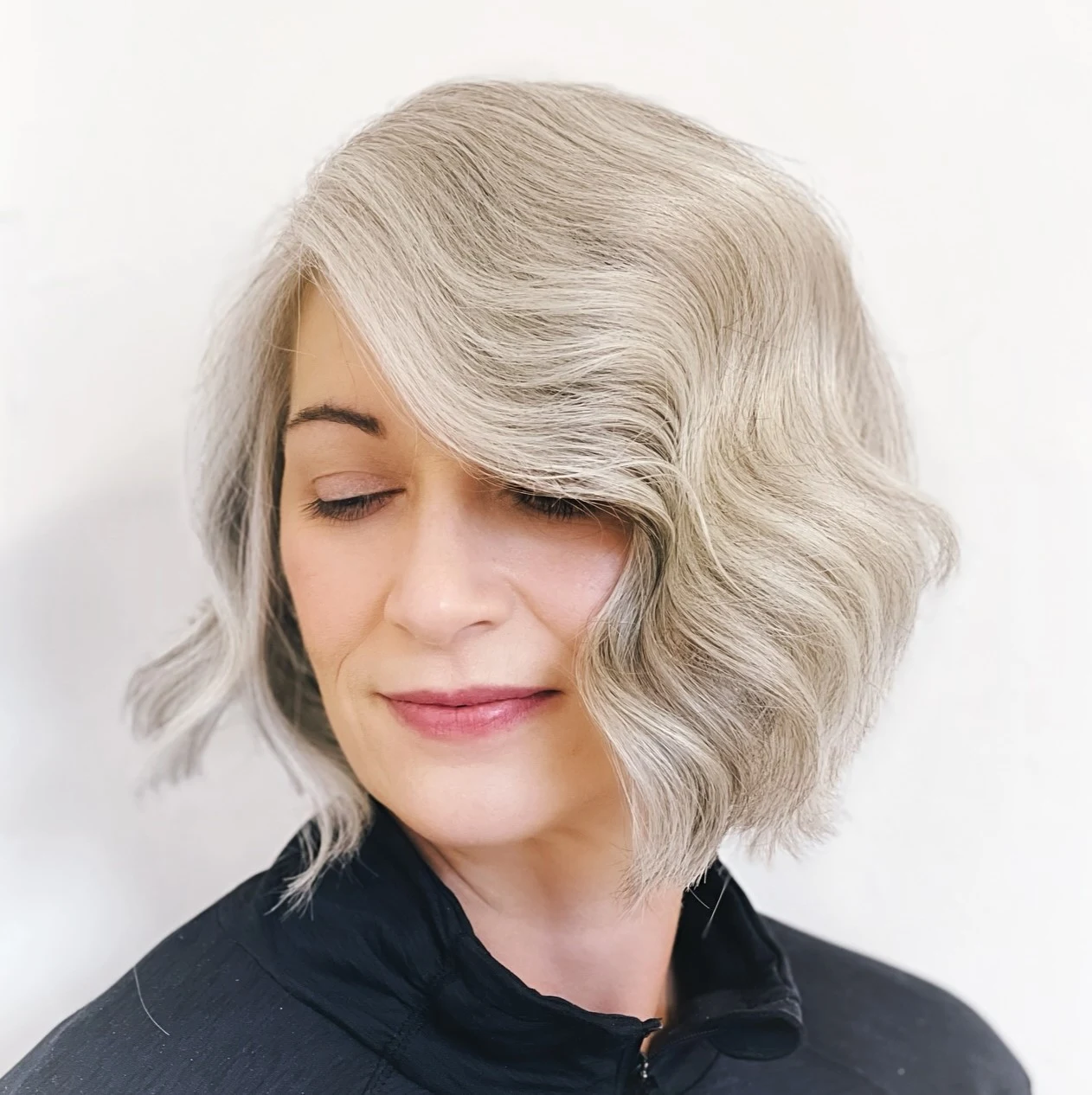
A deep side part changes a classic bob completely. Here the hair is swept to one side in a smooth wave, so one side falls fuller than the other and the part itself becomes a feature. The length stays at bob length, but the asymmetry keeps it interesting.
It suits straight to wavy hair, and it flatters round faces because the side sweep breaks up the width of the face. Part the hair while it is damp, set the wave on the fuller side, and let it dry in place. Re-parting dry hair is the usual cause of a side part that will not stay put.
23. Flower Bun Updo
 Pin
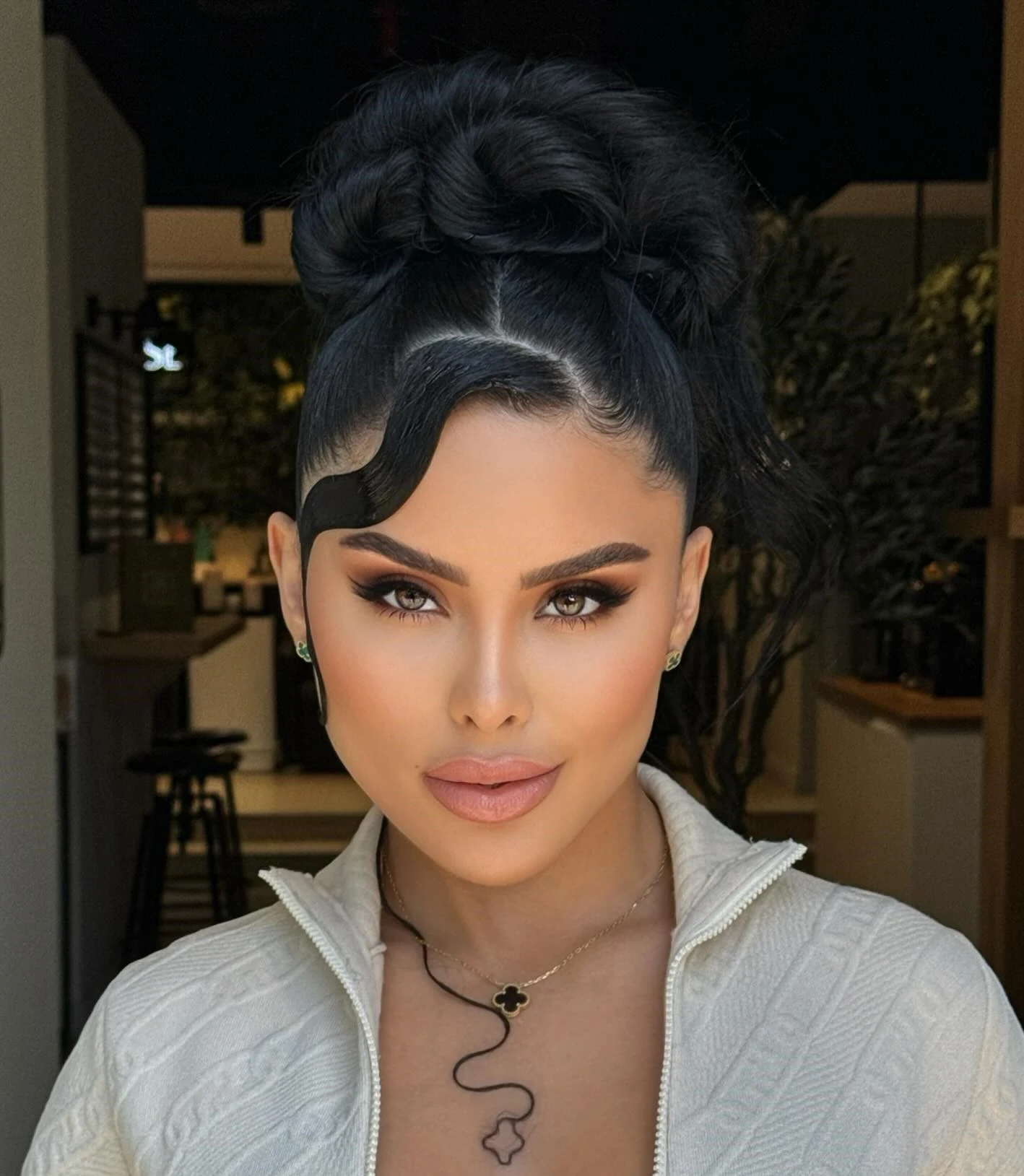
This high bun is shaped to look like a flat rosette, with smaller bun sections placed in front of the main bun to mimic petals. A gelled wave at the front ties the updo back to the 1920s, so the style feels vintage rather than simply formal.
It suits long hair that can be gathered high without slipping, and it works well for a themed party or a formal evening. Build the main bun first, then add the smaller sections one at a time, pinning each as you go. Trying to shape all the sections at once usually leaves the rosette uneven.
24. Soft Wavy Style
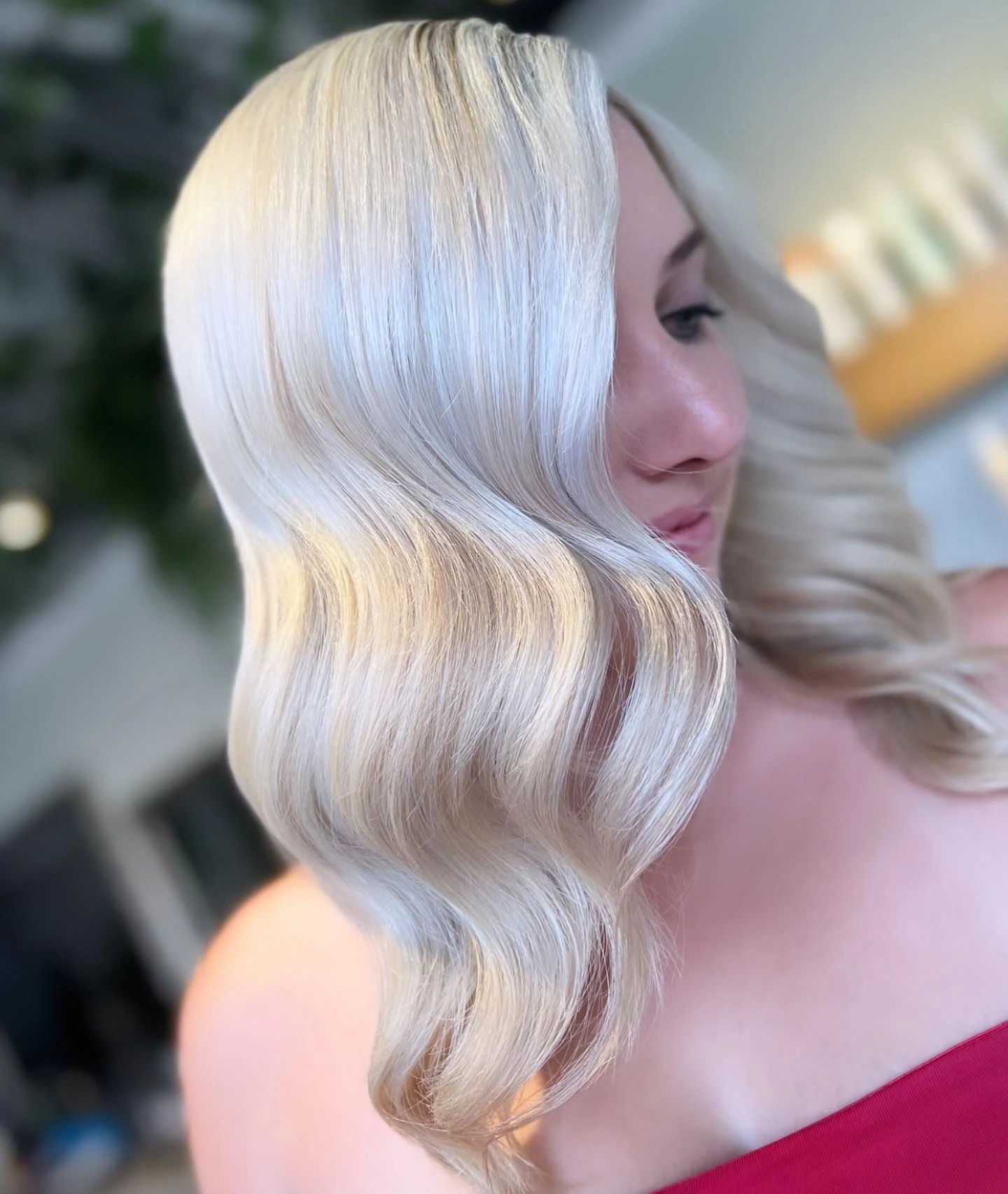 Pin
This medium length style keeps the wave soft and smooth, with a gentle bend that enhances the hair colour and gives a luxurious glow. It is less sculpted than a finger wave, so it feels wearable for everyday as well as for an occasion.
It suits medium, straight to wavy hair, and it flatters most face shapes because the soft wave does not add width at the sides. Use a large barrel iron for the bend, brush it out lightly, and finish with a shine spray. For a second day refresh, brush the wave lightly and add a little more shine spray. You will feel as good as you look in this soft, classic shape.
25. Waves with a Bejeweled Headpiece
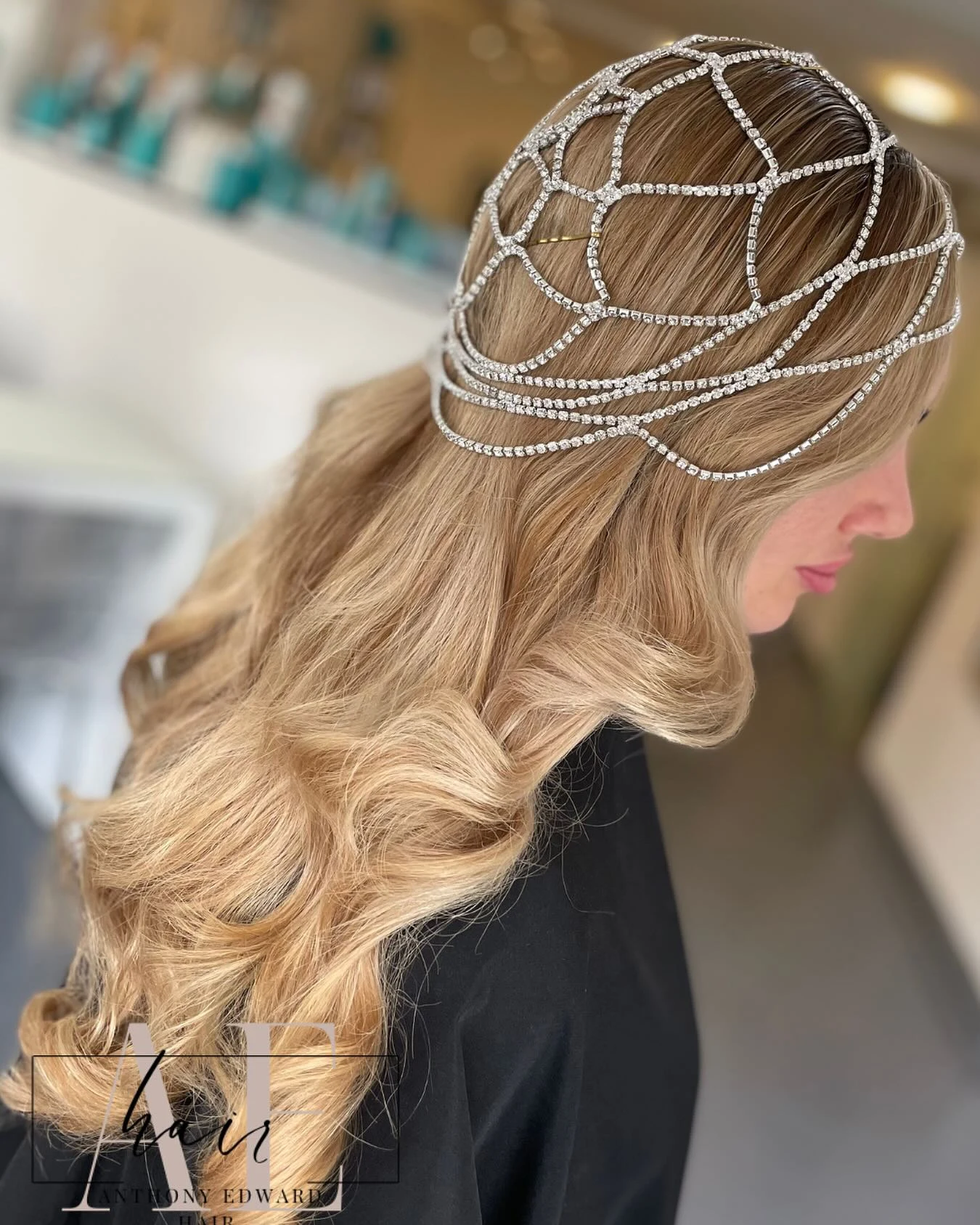 Pin
Long hair gets a textured wave here, sitting somewhere between blowout curls and soft waves, and a bejeweled headpiece adds the finishing sparkle. The wave gives the length movement, while the headpiece keeps the look firmly in flapper territory.
It suits long, wavy hair that holds a loose curl, and it is ideal for a party or a wedding guest look. Set the wave with a medium iron, brush it out to soften it, then place the headpiece across the forehead and pin it at both sides. Placing it too high on the crown makes it slide back, so keep it low and secure.
26. Sleek Black Sculpted Finger Waves
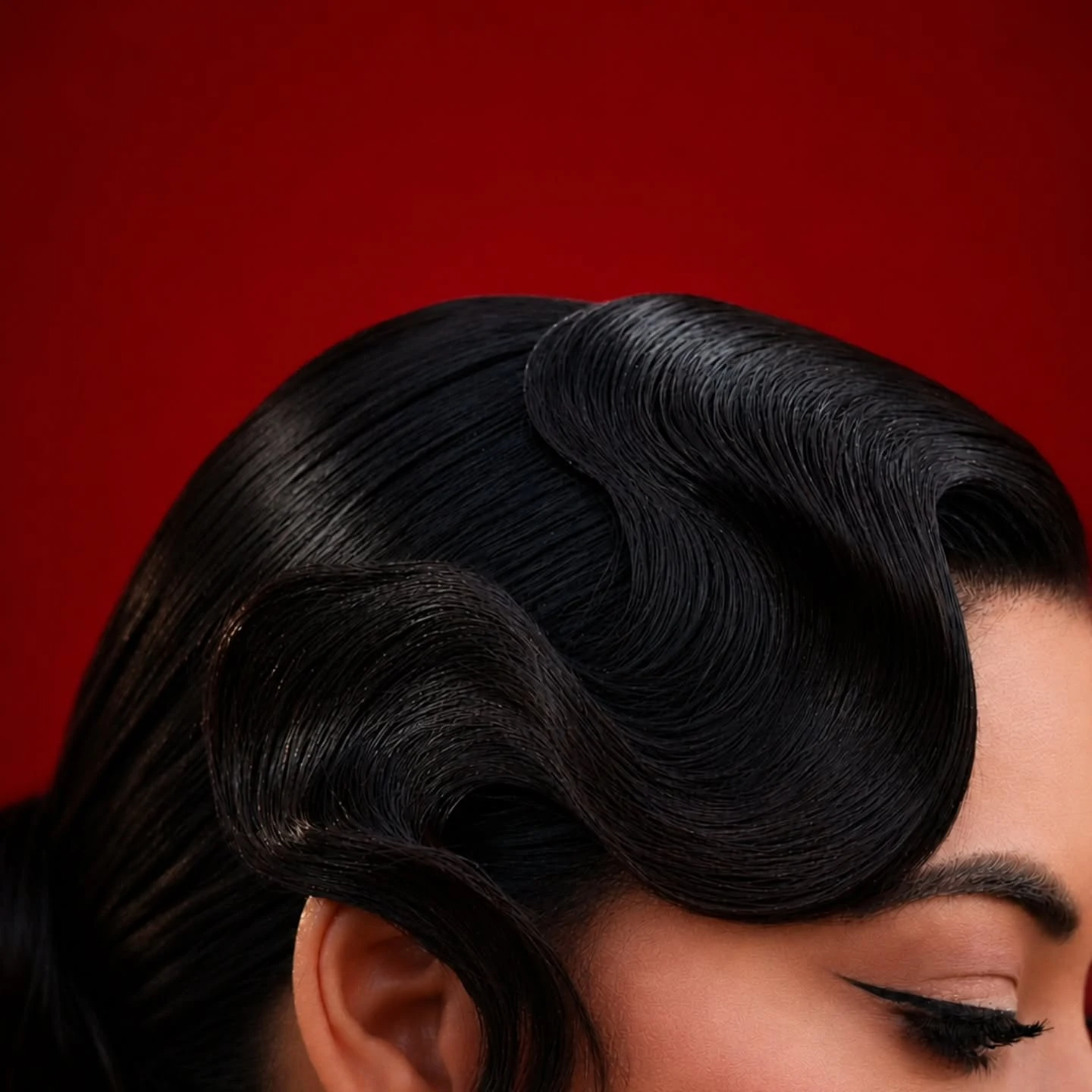 Pin
This close crop of black hair shows finger waves at their most sculpted. Large, glossy waves sweep across the top and side of the head in deep, continuous curves, while the hair underneath is pulled back smooth. The contrast between the bold wave and the sleek base is what makes it so striking.
It suits straight, dark hair that can be smoothed flat and set with strong hold, and it flatters oval and heart shaped faces because the wave frames the forehead. Work with gel on damp hair, shape the curves with a fine comb, and let the set dry fully before you brush anything out. Rushing the drying stage will flatten the curves.
27. Detailed Updo
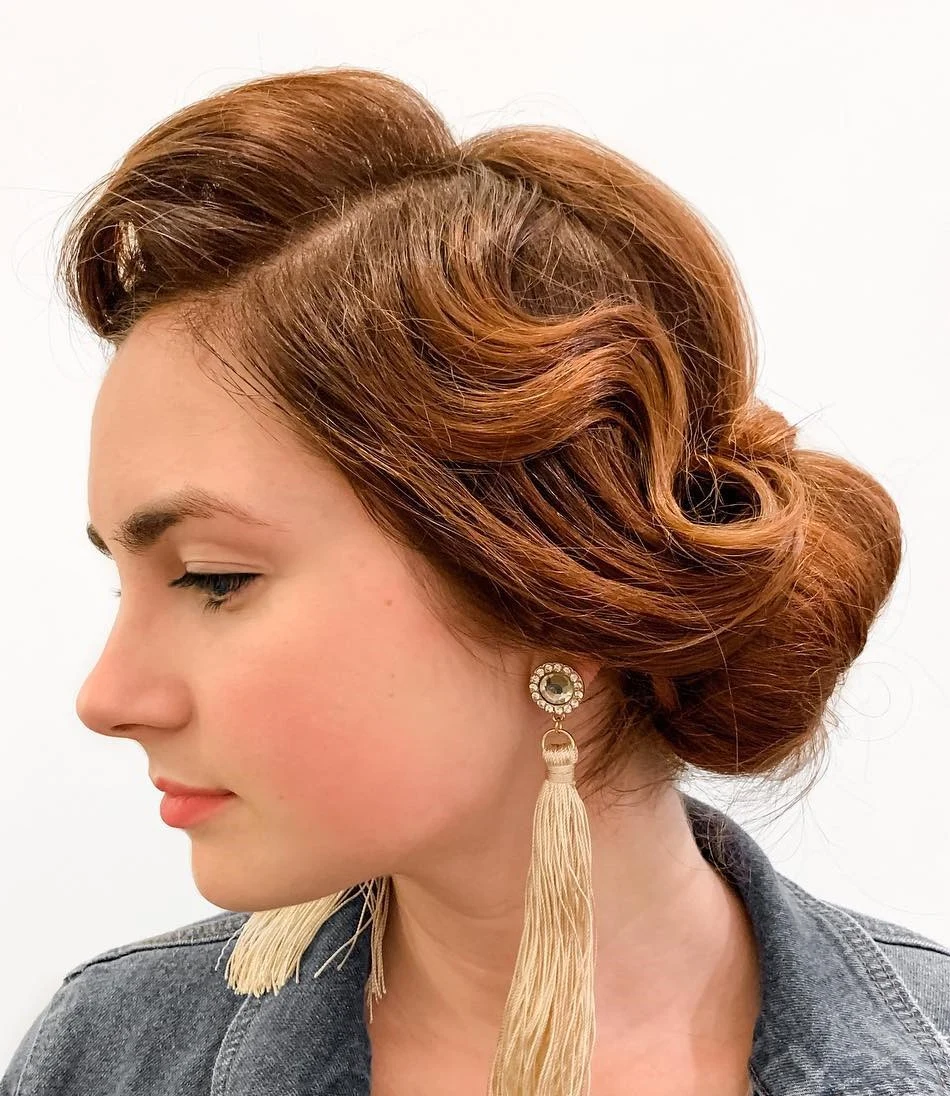 Pin
Want an updo that shows off your neck without losing the vintage detail? This low bun does that, with a side parted front section and a single wavy strand left free to accent the style. The bun itself stays low and neat, so the front wave gets the attention.
It suits long hair, straight to wavy, and it flatters longer necks and oval faces. Twist the back into a low bun first, then shape the front wave and pin it in place, so the wave does not get pulled into the bun. Leave that one strand free on purpose, and spray it lightly, or the detail disappears into the rest of the hair.
28. Short Swirly Crop
 Pin
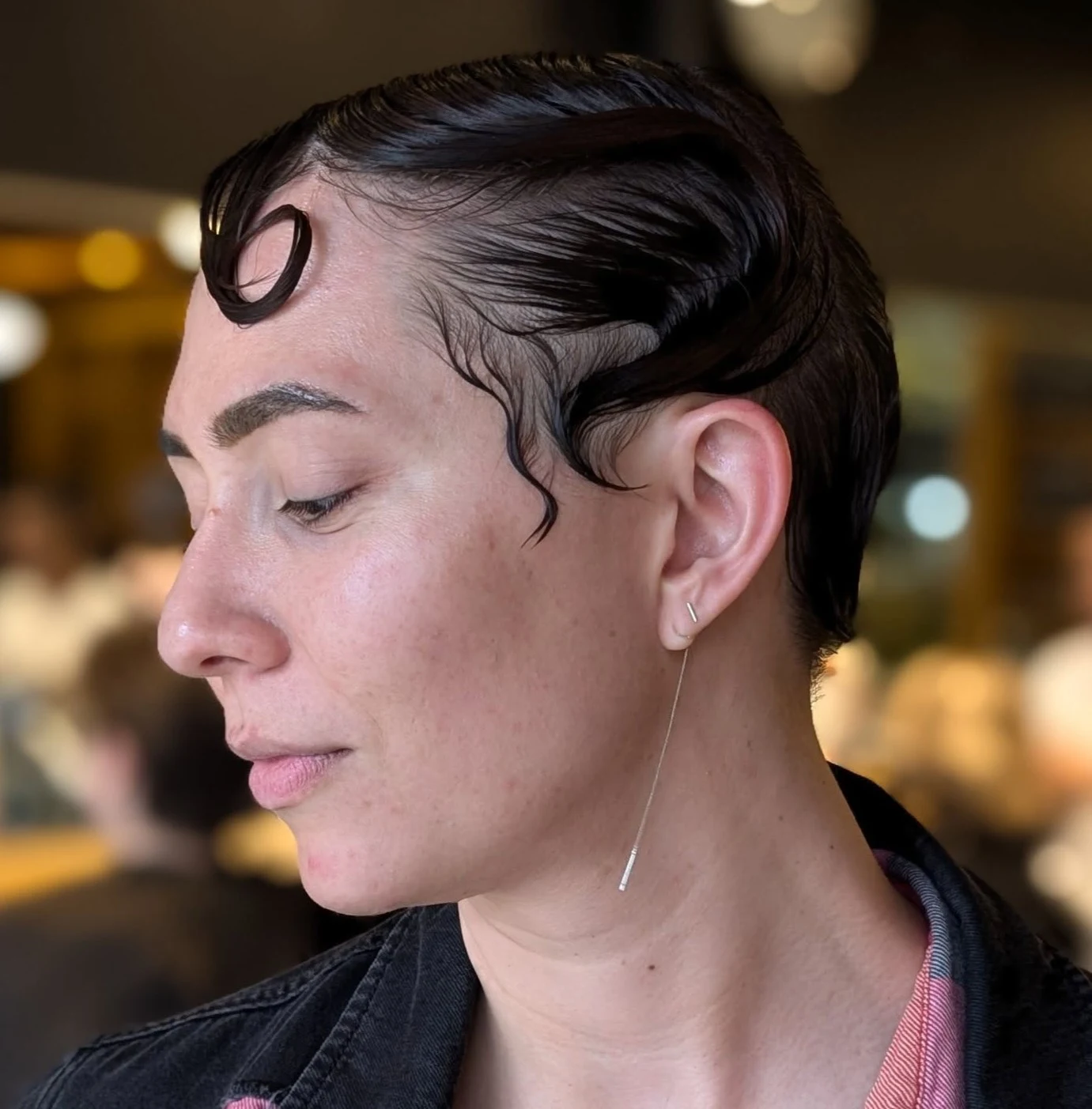
A wet look crop uses plenty of gel to form a swirling wave across a very short cut. The wave is shaped by moving a brush away from and toward the face, building ridges that stay glossy and defined. It is bold, sculpted, and unmistakably vintage.
It suits short, straight hair that can be slicked close, and it is a good choice for a themed night when you want maximum impact from a minimal cut. Apply gel to damp hair in sections, shape each ridge with a brush, and let it dry without touching it. Adding more gel on top of a half dry set will make the hair sticky rather than glossy.
Care Tips for 1920s Hairstyles
- Set finger waves on damp hair with gel or setting lotion, and let them dry fully before removing clips.
- Use a fine comb for sculpted waves, and a large brush for softer Hollywood waves, so you do not mix the two patterns.
- Keep bobs sleek with a smoothing serum on damp hair, and avoid heavy creams that weigh short ends down.
- Pin headpieces and tucked faux bob ends at both sides, not just at the back, to stop them sliding.
- Sleep on a silk pillowcase or wrap set waves loosely, so the pattern survives until morning.
- Refresh a wave with a light mist of water and a little gel, rather than re-curling the whole head.
Frequently Asked Questions
Do 1920s hairstyles work on long hair?
Yes. Long hair works for loose flapper waves, sculpted updos, faux bobs, and bejeweled wave styles. You do not need to cut your hair to try the look, although a faux bob is the easiest way to test a short shape first.
Are finger waves hard to do at home?
They take practice, but they are doable. Work on damp hair in small sections, use gel and clips, and let each wave dry fully. Start with a soft wave before you try a tight, defined pattern.
Which 1920s style is best for a wedding?
Hollywood waves, defined finger waves, and a French twist with a front wave are all strong wedding choices. They photograph well, hold their shape, and suit formal outfits without needing a headpiece.
Can I wear a 1920s bob if my hair is wavy?
Yes, and wavy hair often suits these bobs well. A razored bob or a wavy bixie lets the natural wave show, while a sleek French bob will need smoothing to keep its sharp outline.
How do I keep a finger wave from falling out?
Set it on damp hair with a strong hold product, pin each ridge while it dries, and avoid brushing it out too early. A light hairspray over the finished set helps, but heavy brushing will break the pattern.
Shortcut Summary
- If you want a sharp, modern cut, look at the Sleek French Bob, the Razored Bob, and the Blunt Bob with Straight Bangs.
- If you want sculpted waves, look at Defined Finger Waves, the Blonde Finger Wave Bob, and Sleek Black Sculpted Finger Waves.
- If you want to keep your length, look at the Loose Flapper Hairstyle, the Faux Bob Style, and Waves with a Bejeweled Headpiece.
- If you want an updo, look at the French Twist with Front Wave, the Sculpted Wavy Updo, and the Detailed Updo.
- If you want something short and easy, look at the Micro Bob, the Finger-Wave Pixie, and the Short Pixie Cut.
Conclusion
Choosing between these 1920s hairstyles comes down to three things: how tight you want the wave, how short you are willing to go, and how much setting time you enjoy. A tight finger wave gives the most authentic vintage shape, a soft wave is easier to wear every day, and a bob gives you a clean outline that needs less daily styling.
Start with the shape that feels closest to your own hair, then try one bolder option beside it. That comparison usually makes the choice clear, whether you end up with a sleek bob, a sculpted wave, or a soft updo.
Save two or three photos from this list, compare them side by side, and take your favourite to your next styling session. That small shortlist is the easiest way to turn a long list of ideas into one look you will actually love wearing.
If you like comparing one decade with another, see how these vintage shapes stack up against iconic 2000s hairstyles.

2 thoughts on “28 1920s Hairstyles to Try”